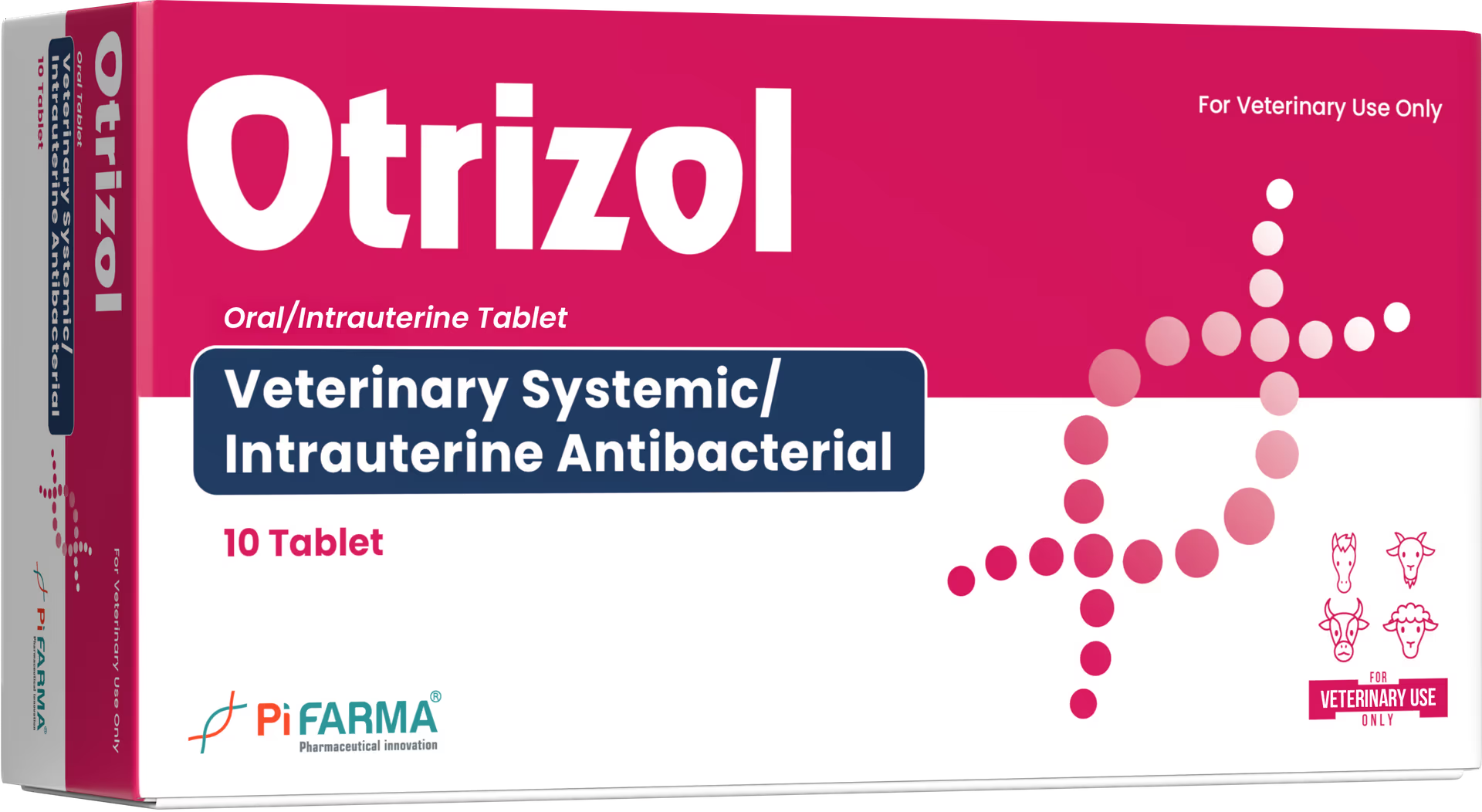
| - | - | - |
|---|---|---|
| Product Group | : | Antibacterials |
| Pharmaceutical Form | : | Oral/ Intrauterine Tablet |
| Active Ingredient | : | Sulfamethoxazole, Trimethoprim |
| Target Species | : | Cow, Mare, Calf, Lamb, Kid, Broiler Chicken, Turkey |
| Package Form | : | 10 Tablet |
For Veterinary Use Only
For Veterinary Use Only
OTRİZOL
Oral/Intrauterine Tablet
Veterinary Systemic/Intrauterine Antibacterial
COMPOSITION
Otrizol is a white, scored, oblong-shaped tablet containing 1000 mg sulfamethoxazole and 200 mg Trimethoprim per tablet.
PHARMACOLOGICAL PROPERTIES
The combination of sulfamethoxazole and trimethoprim has found widespread use in veterinary medicine because of its broad antibacterial spectrum. This combination not only enhances the antibacterial efficacy of trimethoprim and sulfamethoxazole but also broadens the spectrum of activity, including resistant strains, and prevents the development of resistance. Sulfamethoxazole inhibits the dihydrofolic acid synthase enzyme responsible for dihydrofolic acid synthesis in susceptible bacteria, while trimethoprim inhibits the dihydrofolate reductase enzyme responsible for tetrahydrofolic acid synthesis. Thus, since folic acid metabolism is affected at two different points, a strong in vitro synergistic antibacterial effect occurs. Although the active ingredients alone generally exhibit bacteriostatic effects, the effect of Otrizol Tablet, which is a combination of sulfamethoxazole + trimethoprim, is bactericidal. The main bacteria susceptible to the combination are:
Gram-positive aerobes: Staph. aureus, Streptococcus spp., Actinomyces spp., Corynebacterium spp., Listeria monocytogenes, Erysipelothrix rhusiopathie,
Gram-negative aerobes: Actinobacillus spp., Bordetella spp., Enterobacteriaceae (E. coli, Klebsiella spp., Proteus spp., Salmonella spp., Yersinia spp.), Haemophilus spp., Pasteurella spp.,
Anaerobes: Actinomyces spp., Bacteroides spp., Fusobacterium spp., some Clostridium spp., Chlamydia spp.,
Some Mycobacterium spp. and some Nocardia spp. are moderately susceptible. Rickettsia spp., Leptospira spp., Pseudomonas aeruginosa, and Mycoplasma spp. are considered resistant.
When administered orally, Otrizol Tablet is rapidly absorbed from the gastrointestinal tract and exhibits good distribution in body tissues and fluids. It reaches peak plasma concentration within 1 to 4 hours. Although sulfamethoxazole is a rapidly absorbed and excreted sulfonamide, it is absorbed and excreted more slowly than other members of the group. Sulfamethoxazole binds to plasma proteins at a rate of 65%, while trimethoprim binds at a rate of 40-70%. Sixty percent of sulfamethoxazole and 35-50% of trimethoprim are excreted in the urine within the first 24 hours.
AREA OF USE/INDICATIONS
Otrizol Tablet is indicated for respiratory, digestive, and urogenital system infections and septicemias caused by susceptible bacteria in calves whose rumen activity has not been started, lambs and kids, dogs, and in meat chickens and turkeys, for the treatment of respiratory, digestive, and urogenital system infections and septicemias caused by susceptible bacteria, for the treatment of secondary infections caused by susceptible bacteria accompanying viral infections, and for uterine infections caused by susceptible bacteria in cows and mares.
USAGE AND DOSAGE
Intrauterine Administration:
The tablets are placed in the uterus, observing hygiene rules.
|
Species |
Dose |
|
Cow, Mare |
2-4 tablets/day |
Oral Administration: Calves, lambs, and kids are given 1 tablet per 40 kg of body weight orally per day. This amount should be given in one or two divided doses. Dogs are given 1/4 tablet per 10 kg. Treatment is continued for 3-5 days.
The general daily dose for broiler chickens and turkeys is 15-30 mg of total active ingredient per kg of body weight, depending on the severity of the disease and the age of the flock. Accordingly, for chickens and turkeys, 1-2 tablets per 80 kg of body weight per day are thoroughly mixed with sufficient water and then added to the animals' daily drinking water. It is added fresh to the drinking water every day for 3-5 days to ensure that the animals consume it continuously. Care should be taken to ensure that the mixture is homogeneous.
SPECIAL CLINICAL INFORMATION AND SPECIAL WARNINGS FOR TARGET SPECIES
Decreased water consumption and acidosis increase the risk of sulfonamide crystal formation in urine. Monitoring urine samples for crystal formation is recommended in animals with acidic urine who are receiving this medication. As with other sulfonamide treatments, animals should be provided with adequate water. It should not be administered orally to animals with developed rumen due to its potential effects on the flora.
ADVERSE EFFECTS
Therapeutic safety is reduced in patients with folic acid deficiency. It also has adverse effects on the hematopoietic system. In this case, a decrease in platelet and red blood cell counts and an increase in megablast counts are observed. Hypersensitivity reactions may occur in some animals.
They may cause crystal formation in the urinary system in all species. Therefore, this should be considered when used in severely dehydrated animals. To mitigate effects on the kidneys, the patient's hydration should be maintained, and urine alkalization should be considered when necessary. They have toxic effects on the homeopathic system and kidneys. They should be used with caution in newborn animals. Long-term use may lead to hepatotoxicity and hypothyroidism. Since sulfonamides increase the tendency to bleed, treatment should be supported with vitamin K.
Long-term use in dogs may lead to keratoconjunctivitis sicca. They may cause idiosyncratic poisoning characterized by blood count abnormalities, nonseptic polyarthritis, and skin rashes in all dogs, particularly in Doberman Pinschers. Additionally, they have undesirable effects such as diarrhea, vomiting, Steven Johnson Syndrome, jaundice, anemia, coagulation disorders, decreased granulocyte count, and sulfhemoglobinemia.
DRUG INTERACTIONS
Local anesthetics containing para-aminobenzoic acid (PABA) in their structure, such as procaine, benzocaine, and butacaine, and procaine penicillin G may produce an antagonistic effect. In addition, vitamins from the B complex group, such as nicotinamide, folic acid, and choline, as well as their precursors glutamic acid, methionine, valine, isoleucine, arginine, lysine, and certain other amino acids, antagonize the effects of sulfonamides to a lesser degree. When used with or following diuretics, they can cause a significant decrease in platelet count. This is especially important for patients with heart failure and can lead to death.
SYMPTHOMS OF OVER DOSE, PRECAUTIONS AND ANTIDOTE
The toxicity of all combinations based on trimethoprim + sulfonamide derivatives is quite low in farm animals. Nevertheless, the recommended doses should not be exceeded and the drug should not be used for more than 5 days.
Treatment in cases of overdose is symptomatic. Fluid therapy should be administered to promote diuresis and thus aid in the elimination of the drug from the urine. The risk of crystalluria can be minimized by administering sodium bicarbonate. Although rare, epinephrine should be administered in cases of anaphylactic reactions.
WITHDRAWAL PERIODS
Meat: 14 days for calves, lamb and kid after oral administration for sheep and cow after intrauterine administration. 10 days for chicken and turkey.
Milk: 10 days for sheep and cow.
Egg: It is not used in and turkey producing egg for human consumption.
CONTRENDICATIONS
It should not be used in cats, horses with cardiac arrhythmia, those with hematopoietic system disorders, severe liver damage, or renal failure.
GENERAL WARNINGS
Consult your veterinarian before use and in case of unexpected effect is observed. Keep out of reach of children.
STORAGE CONDITIONS AND SHELF LIFE
Store below 25oC, in the original package not frozen or placed in the refrigerator. Shelf life is 5 years.
COMMERCIAL PRESENTATION FORM
It is presented in PVC blister packs covered with aluminium foil inside a cardboard box containing 10 tablets.
PLACE AND CONDITIONS OF SALE
Sold with veterinary surgeon’s prescription in pharmacies and veterinary surgeries. (VSP)
APPROVAL DATE OF THE LEAFLET: 12.01.2026
MARKETING AUTHORIZATION DATE AND NO: 28.03.2000-009/0892
MARKETING AUTHORIZATION HOLDER
Pİ FARMA İLAÇ SAN. VE TİC. A.Ş.
Malıköy Başkent OSB Mah. 26. Cad. No:34/A Sincan/Ankara-Türkiye
MANUFACTURER COMPANY
VİLSAN Veteriner İlaçları TİC. ve SAN. A.Ş.
Balıkhisar Mah. Balıkhisar Köy İçi Küme Evleri No:765A Akyurt/Ankara-Türkiye
Made in Turkiye