| - | - | - |
|---|---|---|
| Product Group | : | Antibacterials |
| Pharmaceutical Form | : | Solution for Injection |
| Active Ingredient | : | Gentamicin Sulphate |
| Target Species | : | Cattle, Horse, Cat, Dog |
| Package Form | : | 50 - 100 - 250 ml |
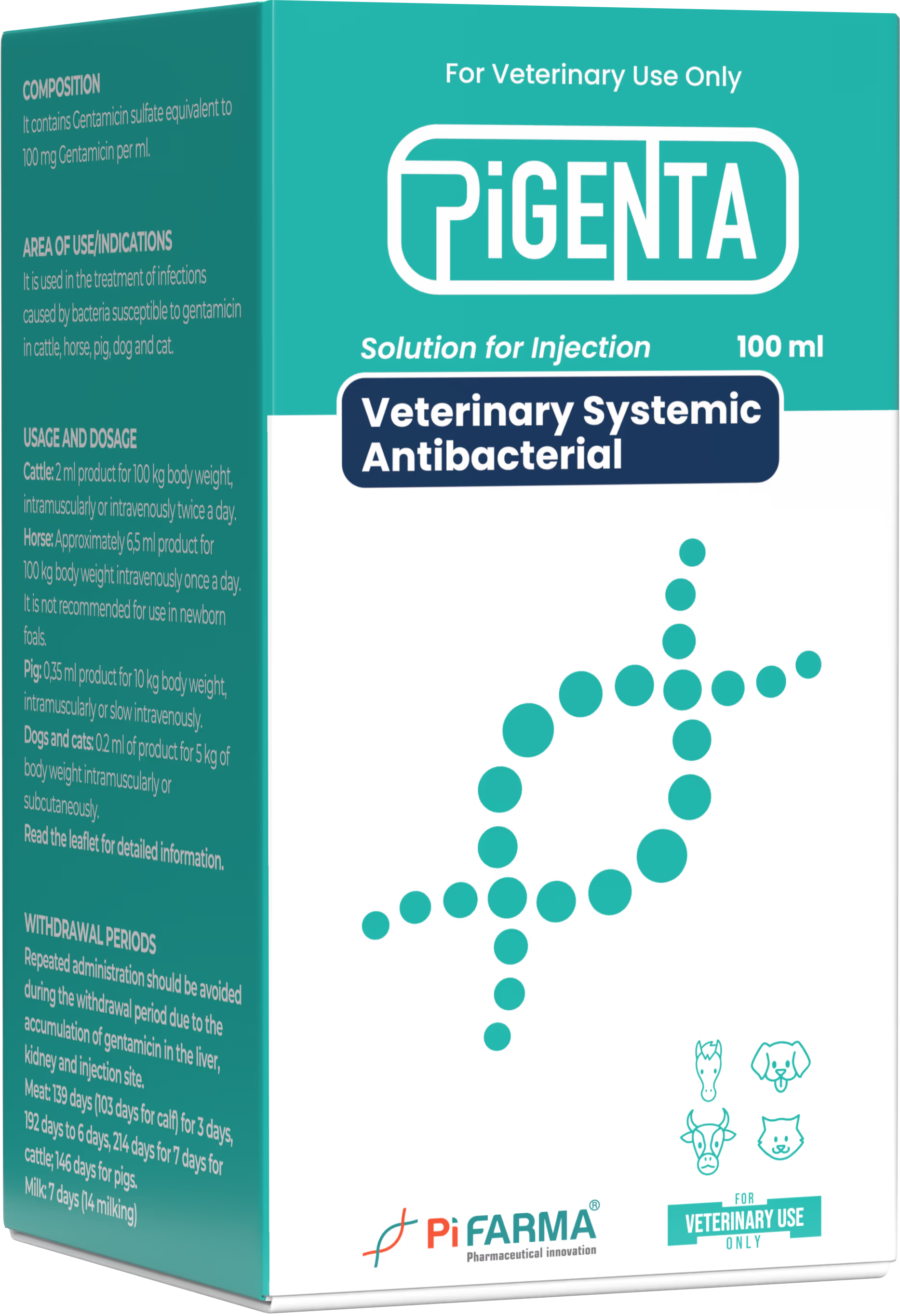
For Veterinary Use Only
For Veterinary Use Only
Solution for Injection
Veterinary Systemic Antibacterial
COMPOSITION
Pigenta Solution for Injection; is a colorless or light yellow colored, sterile solution containing Gentamicin sulfate equivalent to 100 mg Gentamicin, 0,864 mg Methyl paraben and 0,0896 mg Propyl paraben as an antimicrobial preservative, 1 mg Sodium metabisulfite and 10 mg Disodium Edetate as an antioxidant per ml.
PHARMACOLOGICAL PROPERTIES
Pharmacodynamic Properties
Gentamicin sulfate acts directly on the bacterial ribosome, where it inhibits protein synthesis and reduces the relevance of translation of the genetic code. The substance is highly polar and transport appears to be an active process closely linked to electron transport within the cell membrane, oxidative phosphorylation and respiratory quinones. Antibacterial activity is directed primarily against aerobic gram-negative bacteria.
Its main activity is against Gram-negative bacteria. Breakpoints for gentamicin are 4 µg/ml for susceptible (S) and 16 µg/ml for resistance (R) (Source: CLSI 2008).
Resistance to aminoglycosides is primarily produced by enzymes encoded by genes located on bacterial plasmids. Enzymes act inside the bacterium to change aminoglycosides, thus preventing them from binding to ribosomes. This type of plasmid-associated resistance is transferable between bacteria. A single type of plasmid may confer cross-resistance to multiple aminoglycosides and resistance to other unrelated antimicrobials.
Pharmacokinetic Properties
Gentamicin sulfate is poorly absorbed from the gastrointestinal tract, therefore, for systemic effect, the product should be administered parenterally. Gentamicin is rapidly absorbed by intramuscular injections: peak plasma concentrations are reached in ½ to 2 hours. It occurs in synovial and peritoneal fluids, but effective levels are not reached in cerebrospinal fluid, bronchial secretions, ocular fluids, or milk. Elimination is primarily by glomerular filtration and appears rapidly in the urine.
Gentamicin is a highly polar drug with poor tissue penetration, distributed mainly in extracellular fluids.
AREA OF USE/INDICATIONS
It is used in the treatment of infections caused by bacteria susceptible to gentamicin as described below:
Cattle: Gastrointestinal system infections, Urogenital system infections, Septicemias
Dog, Cat: Respiratory tract infections, Gastrointestinal system infections, Urogenital system infections, Ear infections (acute and chronic bacterial otitis externa), Septicemias
Horse: In the treatment of lower respiratory tract infections caused by Gram-negative aerobic bacteria susceptible to gentamicin.
Pigs: infections of the respiratory tract, metritis, mastitis and agalactia (MMA) complex, enzootic pneumonia, infections caused by E. coli.
USAGE AND DOSAGE
Body weight needs to be determined as accurately as possible to ensure correct dosage.
In cattle, it is administered intramuscularly or intravenously.
It can be administered at a dose of 2 mg gentamicin/kg body weight (2 ml product per 100 kg body weight) twice a day for 3-7 days. When the dose volume is large, the dose should be administered in divided doses.
In horses, it can be administered intravenously at a dose of 6.6 mg/kg body weight (approximately 6,5 ml product per 100 kg body weight) once a day for 3-5 days.
It is not recommended for use in newborn foals.
In pigs, Administered intramuscularly or slow intravenously at a dose of 5.9 mg gentamicin sulfate (= 3.5 mg gentamicin) per kg bodyweight (0.35 ml/10 kg bodyweight given twice daily at intervals of 12 hours for 3-5 days. In pigs do not administer more than 1 ml per injection site.
In dogs and cats, it is administered intramuscularly or subcutaneously, at a dose of 4 mg/kg (0.2 ml of product per 5 kg of body weight), twice for the first day, once a day for 3-5 days.
SPECIAL CLINICAL INFORMATION AND SPECIAL WARNINGS FOR TARGET SPECIES
Repeated injections may cause reactions at the injection site.
During the treatment of Gram-negative bacterial infections with aminoglycosides, it is recommended to keep in mind that the level of endotoxin in the blood may increase and cause shock, and it is recommended to take precautions accordingly. All aminoglycosides lower blood pressure and cardiac output, slow down the heart rate. They also lower blood total calcium levels. Age of the animal, shock, acidosis, acute renal failure, hepatic dysfunction, sepsis, previous exposure to aminoglycosides, electrolyte imbalance, hypotension increase sensitivity to aminoglycosides.
Fluid resistance should be balanced from the very beginning of treatment in dehydrated animals.
Since neuromuscular blockade may occur during gentamicin injection, the injection should be done very slowly.
Gentamicin is a narrow spectrum bactericidal antibiotic. It is ineffective against anaerobic bacteria and mycoplasmas.
Gentamicin does not penetrate cells or abscesses. Gentamicin-inflamed tissue residues are inactivated in a low pH and low oxygen environment.
The dosage regimen should never be exceeded.
This product should be used based on susceptibility test results whenever possible.
Use of this product other than specified in product specifications may result in an increased risk of nephrotoxicity and an increased prevalence of gentamicin-sensitive bacteria.
Utmost care should be exercised when co-administering NSAID products with potentially nephrotoxic products such as furosemide and other aminoglycosides.
Horse: Gentamicin is known to cause nephrotoxicity even at therapeutic doses. Ototoxicity from gentamicin has also been reported. Gentamicin has a narrow margin of safety. This product should only be used according to the benefit-risk assessment of the veterinarian, considering alternative treatments.
To reduce the risk of nephrotoxicity, it should be ensured that the animals under treatment have adequate hydration, and fluid therapy should be given if necessary.
Close monitoring of horses treated with gentamicin is strongly recommended. With this follow-up, analysis of blood parameters related to kidney functions (such as creatinine, urea) and urine (gamma glutamyl transferate/creatinine ratio) should be performed. Due to individual changes in plasma peak and trough levels, it is recommended to control the therapeutic level of gentamicin in the blood. Where blood monitoring is possible, plasma peak density should be 16–20 μg/ml.
The safety of gentamicin in foals has not been studied, therefore no information is available on other effects of gentamicin in foals, particularly newborns. Based on available information, the use of gentamicin in foals, especially newborns, carries a higher risk of nephrotoxicity than in adults.
In young animals, gentamicin has a slower excretion than in adults.
For these reasons, the use of gentamicin in foals is not recommended.
Special care should be taken in its use in elderly, endotoxemic, septic and dehydrated horses.
Tolerance of the product has not been evaluated in newborn foals.
Use in Pregnancy: Do not use in pregnant cattle. Its safety in pregnant horses is unknown. However, studies in laboratory animals have shown that gentamicin has fetal nephrotoxicity. Can only be used based on veterinarian's benefit-risk assessment.
ADVERSE EFFECTS
Especially cats are sensitive to gentamicin. Local reactions may occur at the injection site, especially in cases of repeated injections in the adjacent area. Mild persistent reactions may occur at the injection site. Especially in cats, in high doses or in repetitive situations, the product can cause severe nephritis and damage to balance and hearing organs. If ataxia and vomiting occur, treatment should be discontinued.
DRUG INTERACTIONS
It should not be used with other aminoglycoside antibiotics or other drugs known to induce ototoxicity or nephrotoxicity (tetracyclines, sulfonamides, etc.), general anesthetics, muscle relaxants, polymyxins. It should not be used together with non-steroidal anti-inflammatory drugs, other neuromuscular blocking drugs, iron preparations, furosemide and other diuretics. Halothanes increase the cardiovascular depression effect of gentamicin. It should not be mixed with other veterinary medicinal products. This product is incompatible with alkaline products. Gentamicin should not be used in the same syringe with cephalosporins, chloramphenicol or sulfonamides.
SYMPTOMS OF OVERDOSE, PRECAUTIONS AND ANTIDOTE
The product has not been specifically tested in overdose studies and therefore no safety margins have been established.
Overdose should not be done during treatment with aminoglycosides. For neuromuscular blockade in overdose, one of the options edrophonium (0.5 mg/kg), calcium chloride (10 - 20 mg/kg), calcium gluconate (30 - 60 mg/kg) or neostigmine (100 - 200 mcg/kg) can be used. For renal toxicity, aminoglycoside administration should be stopped, polyionic fluid therapy should be applied to provide diuresis.
WITHDRAWAL PERIODS
Repeated administration should be avoided during the withdrawal period due to the accumulation of gentamicin in the liver, kidney and injection site.
Meat: 139 days (103 days for calf) for 3 days, 192 days to 6 days, 214 days for 7 days for cattle, 146 days for pigs.
Milk: 7 days (14 milking)
CONTRAINDICATIONS
Do not use in kidney disorders, dehydration, hearing paths, balance problems and otitis media.
It should not be used with potent diuretic and potentially nephrotoxic medicinal drugs.
It should not be used in exotic animals as it causes kidney failure.
If it is to be used with muscle relaxant drugs, it should not be used as an intravenous or abdominal injection.
Do not use in animals known to be sensitive to gentamicin and other aminoglycoside antibiotics. Do not administer simultaneously with bacteriostatic antibiotics.
Do not administer to animals resistant to gentamicin, kanamycin, streptomycin, dihydrostreptomycin and paromomycin.
Do not use in animals with a body weight of less than two kilograms.
GENERAL WARNINGS
Consult your veterinarian before use and in case of an unexpected effect. Keep out of reach of children.
PRECAUTIONS TO BE TAKEN BY THE ADMINISTRATOR AND WARNINGS FOR VETERINARY SURGEON
People with known sensitivity to gentamicin should avoid contact with the veterinary medicinal product. The veterinary medicinal product is administered with caution. In case of accidental injection, seek medical advice immediately and show the package label and leaflet to the doctor.
STORAGE CONDITIONS AND SHELF LIFE
It should be stored under 25°C in the original package, protected from sunlight, without being frozen or placed in the refrigerator. Shelf life is 2 years. It should be used within 28 days after opening. The stopper should not be punctured more than 100 times for 250 ml, 50 times for 10 ml after the first use.
WARNINGS FOR DISPOSAL AND NON-TARGET SPECIES
Unused or leftover product should be disposed of according to the relevant legislation.
COMMERCIAL PRESENTATION FORM
Offered for sale in 50 ml, 100 ml and 250 ml amber colored glass vials with cardboard boxes.
PLACE AND CONDITIONS OF SALE
Sold with Veterinary Surgeon’s prescription in pharmacies and veterinary surgeries.
APPROVAL DATE OF THE PACKGAGE INSERT:19.10.2023
MARKETING AUTHORIZATION DATE AND NO: 21.05.2012 – 026/0009
MARKETING AUTHORIZATION HOLDER:
Pİ FARMA İLAÇ SAN. VE TİC. A.Ş.
Malıköy Başkent OSB Mah. 26. Cad. No:34/A Sincan/Ankara-Türkiye
MANUFACTURER COMPANY:
1- Pİ FARMA İLAÇ SAN. VE TİC. A.Ş.
Malıköy Başkent OSB Mah. 26. Cad. No:34/A Sincan/Ankara-Türkiye
2- FDN İLAÇ SAN. VE TİC. LTD. ŞTİ.
Büyükkayacık OSB Mahallesi İnsu Sokak No:3 Selçuklu/Konya-Türkiye
Made in Turkiye