| - | - | - |
|---|---|---|
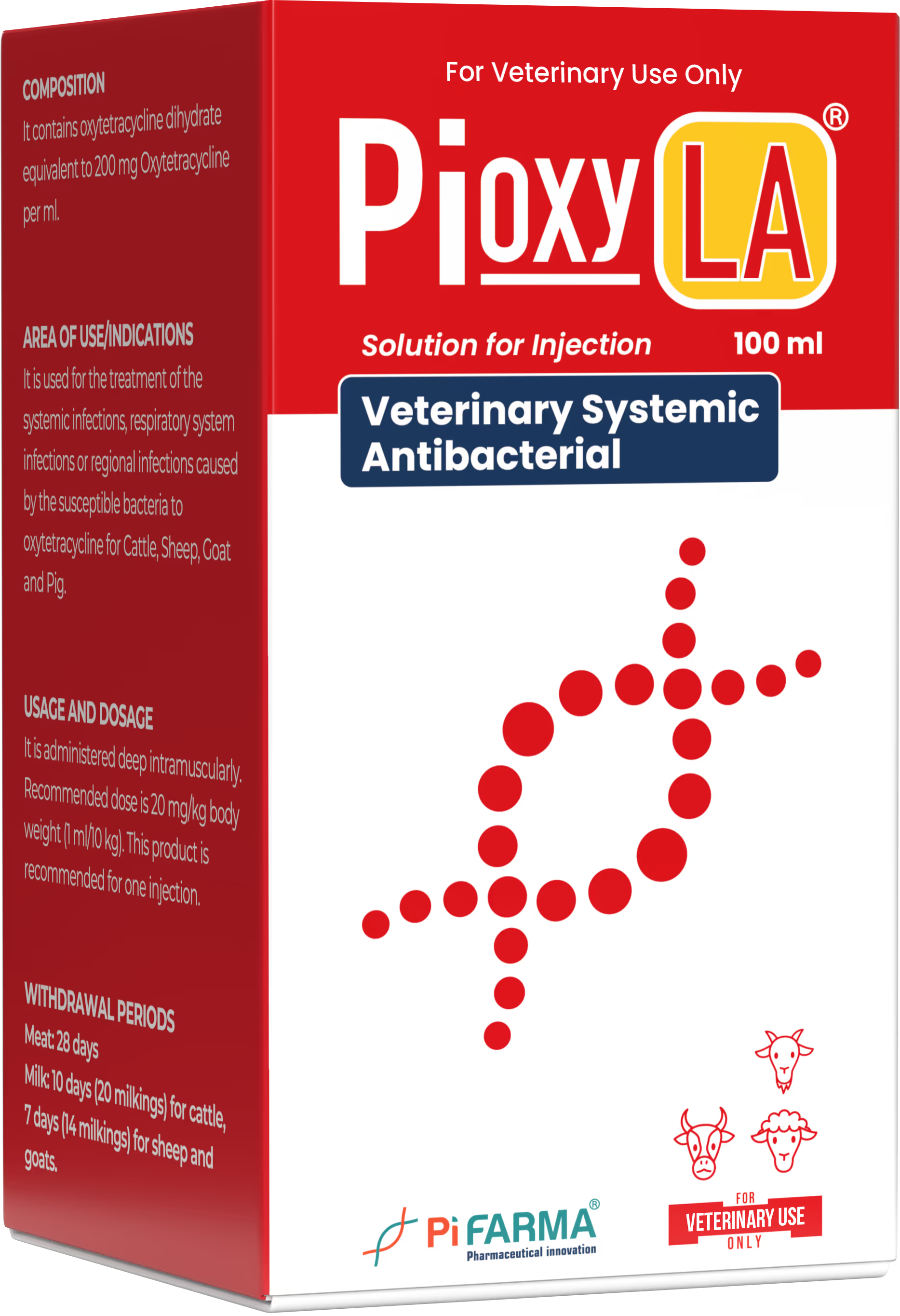
| Product Group | : | Antibacterials |
| Pharmaceutical Form | : | Solution for Injection |
| Active Ingredient | : | Oxytetracycline Dihydrate |
| Target Species | : | Cattle, Sheep, Goat |
| Package Form | : | 50 - 100 - 250 ml |
For Veterinary Use Only
For Veterinary Use Only
Solution for Injection
Veterinary Systemic Antibacterial
COMPOSITION
Pioxy LA Solution for Injection is yellow-amber colored, clear sterile solution containing 200 mg of oxytetracycline base equivalent to oxytetracycline dihydrate, 3.5 mg of sodium formaldehyde sulfoxylate as an antioxidant preservative and 400 mg of N-methyl-2-pyrrolidone per ml.
PHARMACOLOGICAL PROPERTIES
Pharmacodynamic Properties
Oxytetracycline has bacteriostatic effect and inhibits bacterial protein synthesis by binding to the 30S subunit of bacterial ribosomes. Numerous genes have been identified that regulate resistance to tetracyclines and these genes can be carried on plasmids or transposons between pathogenic and non-pathogenic bacteria. The most common mechanism of resistance is removal of the oxytetracycline from the organism by an energy-dependent efflux pump or protection of ribosomes from binding by a modified target site.
Resistance to one tetracycline leads to the development of resistance to other tetracyclines due to cross-resistance.
Oxytetracycline is a broad-spectrum antibiotic. It is mainly active against Gram positive and Gram negative aerobic and anaerobic bacteria, Mycoplasma, Chlamydia and Rickettsiae.
Oxytetracycline is active against the following bacteria in vitro.
Bordetella bronchiseptica, Trueperella pyogenes, Erysipelothrix rhusiopathiae, Escherichia coli, Mannheimia haemolytica, Pasteurella multocida, Staphylococcus aureus, Streptococcus agalactiae ve Streptococcus uberis.
Pharmacokinetics Properties
Absorption
Oxytetracycline is rapidly absorbed from the injection site and reaches peak plasma levels in 2-6 hours. The therapeutic plasma level lasts for 48-72 hours.
Distribution
Oxytetracycline is distributed all to the body, reaching the highest concentration in the liver, kidney, spleen and lung. It is also stored where ossification is active. It also crosses the placenta into the fetal circulation. The plasma level in the offspring reaches about half that of the mother. Difficult to pass into the cerebrospinal fluid.
Metabolism/Biotransformation
Oxytetracycline is metabolized to different degrees. The most commonly identified substance in tissue, faeces and urine is parent tetracycline. Approximately 30% of it is excreted unchanged in feces. It binds reversibly to plasma proteins and is widely distributed. It is excreted from the blood by the liver and reaches high concentrations in the parenchyma and bile. Bile concentrations can be up to 30 times higher than in blood. Entetohepatic circulation limits bile secretion and causes prolonged therapeutic concentrations.
Excreation
Oxytetracycline is mainly excreted by the kidney. It is also excreted in the feces regardless of the route of administration. Less than 2% of the administered dose is excreted in milk
AREA OF USE/INDICATIONS
It is used for the treatment of the systemic infections, respiratory system infections or regional infections caused by the susceptible bacteria to oxytetracycline for cattle, sheep and goat.
Cattle: Treatment of respiratory system infections caused by Mannheimia haemolytica and Pasteurella multocida, umbilical infections and septic artrit caused by Trueperella pyogenes, Escherichia coli and Staphylococcus aureus, clinical mastitis caused by Trueperella pyogenes, Escherichia coli, Staphylococcus aureus, Streptococcus agalactiae and Streptococcus uberis, metrit caused by Escherichia coli.
Sheep-Goat: Metaphylaxis and treatment of respiratory system infections caused by Mannheimia haemolytica and Pasteurella multocida, umbilical infections and septic artrit caused by Trueperella pyogenes and Escherichia coli, clinical matitis caused by Trueperella pyogenes, Escherichia coli, Staphylococcus aureus, Erysipelas caused by Erysipelothrix rhusiopathiae, enzootic abortus caused by Chlamydophila abortus.
USAGE AND DOSAGE
It is administered deep intramuscularly. Recommended dose is 20 mg/kg body weight (1 ml/10 kg). this product is recommended for one injection. No more than 20 ml of product for cattle, 5 ml for sheep-goat should be administered at an injection site.
The body weight of the animal should be calculated as accurately as possible for the right dose.
After an injection, effective blood concentration is obtained during 72 hours in cattle, 48 hours in sheep and goat.
SPECIAL CLINICAL INFORMATION AND SPECIAL WARNINGS FOR TARGET SPECIES
Prolonged usage of antiinfectives can cause to süper-infection. Photodermatitis can be observed following oxytetracycline treatment. Clamydial infections in the herd is not completely cured by Oxytetracycline.
Do not dilute the product.
Different injection areas should be used for simultaneous treatments.
Use this product according to the results of susceptibility tests for bacteria obtained from animals. If this is not possible, use according to regional epidemiological information regarding the susceptibility of target bacteria.
In practice, national and regional antimicrobial policies should be taken into account.
Failure to use this product in accordance with the directions outlined in the summary of product characteristics may result in the growth of bacteria resistant to oxytetracycline and reduced efficacy of other tetracyclines due to possible cross-resistance.
Usage during pregnancy and lactation: The safety of this product has not been established in cattle, sheep, and goats; during pregnancy, lactation, or in breeding animals. Laboratory studies conducted in rabbits and rats with the excipient N-methylpyrrolidone have shown evidence of foetotoxic effects. It should only be used based on a benefit-risk assessment by a responsible veterinary surgeon.
UNDESIRED EFFECTS
A transient reaction may rarely occur at the injection site. Use during the period of tooth development, including late pregnancy, may cause discoloration of the teeth. The same is true for bones. Very rarely allergic reactions, hepatoxicity and blood dyscrasia may occur. Side effects related to the digestive system and, less frequently, photosensitivity may occur. High doses or continuous administration have a negative effect on bone development and healing.
DRUG INTERACTIONS
It should not be used with bacteriostatic and bactericidal antimicrobials. Two or three value cations (Mg, Fe, Al, Ca) can form chelate with the tetracyclines so they are not mixed with the products containing them.
SYMPTOMS OF OVERDOSE, PRECAUTIONS AND ANTIDOTE
There is no specific antidote. In case of overdose, symptomatic treatment is applied.
WITHDRAWAL PERIODS
Meat: 28 days
Milk: 10 days (20 milkings) for cattle, 7 days (14 milkings) for sheep and goats.
CONTRAINDICATIONS
It is not used in horse, dankey, cat and dogs. Do not use intravenously.
Do not use in the animals have hepatic and renal damage.
Not for use in animals with hypersensitivity or allergic reaction to tetracyclines or excipients
GENERAL WARNINGS
Consult your veterinarian before use and in case of an unexpected effect. Keep out of reach of children. Read the leaflet before use.
PRECAUTIONS TO BE TAKEN BY THE ADMINISTRATOR AND WARNINGS FOR VETERINARY SURGEON
This product can cause hypersensitivity. Wash hands after use.
In case of accidental exposure to skin or eye, wash the area with plenty of water.
The person who sensitive to tetracyclines avoid contact with the product.
Avoid accidental self-injection. In case of self-injection, consult a doctor immediately along with the product and the package insert. Laboratory studies conducted in rabbits and rats with the excipient N-methylpyrrolidone have shown evidence of foetotoxic effects. Women of childbearing age, pregnant women, or women who may become pregnant should take the utmost care to avoid accidental self-injection and contact with the product and should take all necessary precautions.
STORAGE CONDITIONS AND SHELF LIFE
It should be stored below 25°C in the original package, without being frozen or placed in the refrigerator. Shelf life is 2 years. Once opened, it should be used immediately and the product should not be stored.
DISPOSAL AFTER USE AND WARNINGS FOR NON-TARGET SPECIES
Any used veterinary medicinal product or its residual material should be disposed of in accordance with local regulations.
COMMERCIAL PRESENTATION FORMS
Offered for sale in 50 ml, 100 ml and 250 ml amber Type II glass vials, with grey bromobutyl
rubber stoppers and printed flip-off colorless caps.
PLACE AND CONDITIONS OF SALE
Sold with Veterinary Surgeon’s prescription in pharmacies and veterinary surgeries (VSP).
APPROVAL DATE OF PACKAGE INSERT: 02.09.2025
MARKETING AUTHORIZATION DATE AND NO: 28.12.2009-022/0014
MARKETING AUTHORIZATION HOLDER
Pİ FARMA İLAÇ SAN. VE TİC. A.Ş.
MANUFACTURER COMPANY
1- Pİ FARMA İLAÇ SAN. VE TİC. A.Ş.
Malıköy Başkent OSB Mah. 26. Cad. No:34/A Sincan/Ankara-Türkiye
2- FDN İLAÇ SAN. VE TİC. LTD. ŞTİ.
Büyükkayacık OSB Mah. İnsu Sokak No:3 Selçuklu/Konya-Türkiye
Made in Turkiye