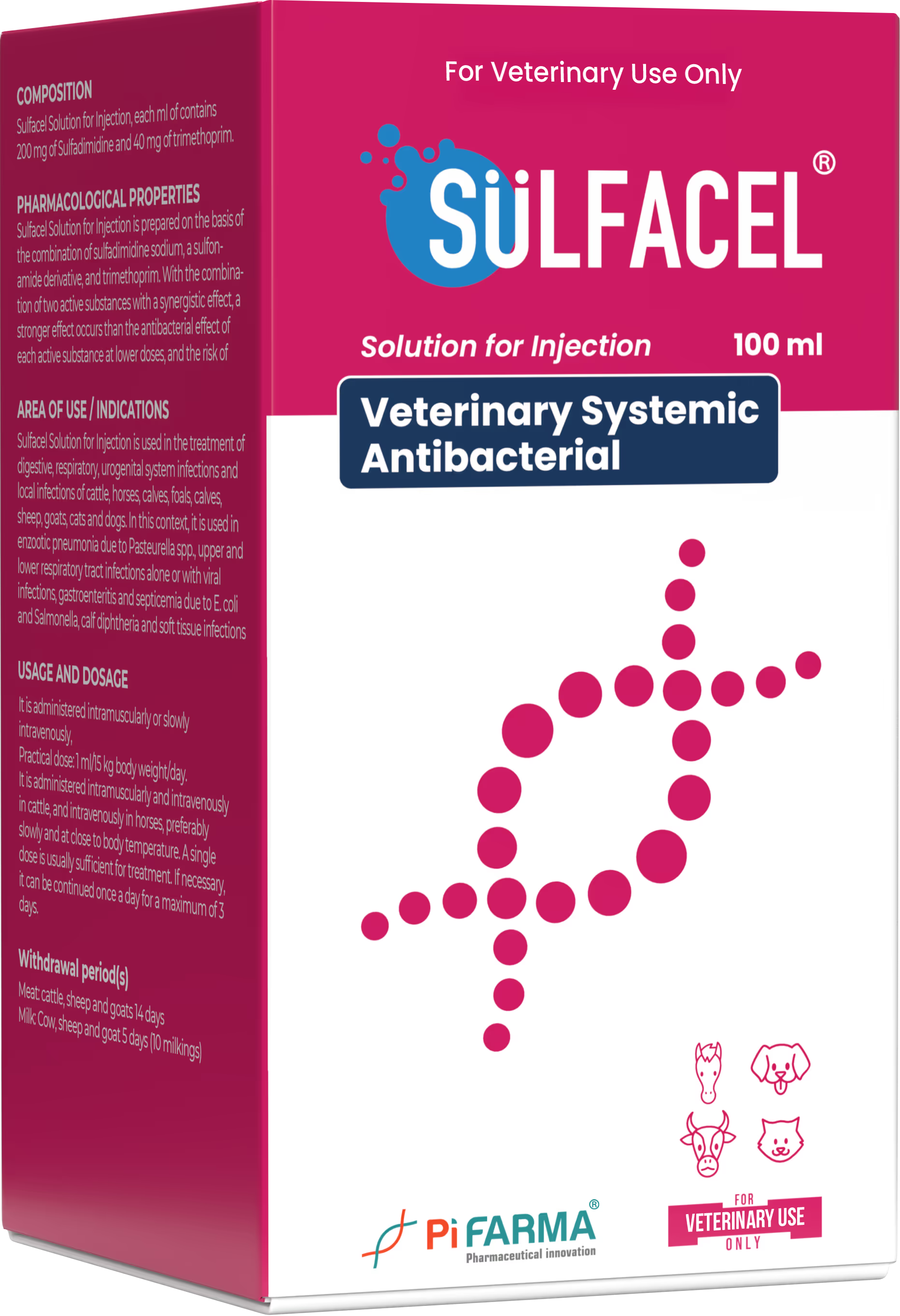
| - | - | - |
|---|---|---|
| Product Group | : | Antibacterials |
| Pharmaceutical Form | : | Solution for Injection |
| Active Ingredient | : | Sulfadimidine Sodium, Trimethoprim |
| Target Species | : | Cattle, Horse, Cat, Dog |
| Package Form | : | 50 - 100 ml |
For Veterinary Use Only
For Veterinary Use Only
Solution for Injection
Veterinary Systemic Antibacterial
COMPOSITION
Sülfacel Solution for Injection; is a clear, light yellow-yellow colored sterile solution containing 215,8 mg Sulfadimidin sodium equivalent to 200 mg Sulfadimidin, 40 mg Trimetoprim and 560 mg N-methyl-2-pyyrolidone per ml.
PHARMACOLOGICAL PROPERTIES
Pharmacodynamic Properties
Sulfadimidin and trimetoprim is an effective combination containing 5 units sulfadimidin + 1 unit trimetoprim. Sulfadimidine, a sulfonamide group antibacterial and trimethoprim, a diaminopyrimidine group antibacterial, have a bacteriostatic effect when used alone and a synergistic bactericidal effect when used in combination. The mechanism of action of the combination is based on the sequential qualified blockade of two components involved in the synthesis of folic acid in bacteria. The spectrum of activity of the Sulfadimidine/Trimethoprim combination is same with the spectrum of activity of sulfonamides, i.e. it is effective against most gram-positive and gram-negative bacteria (E.coli, Shigella spp., Klebsiella spp., Proteus vulgaris, Pasteurella spp., Staphylococci, Actinomyces spp. etc.). As is common with the use of Sulfonamides, bacterial resistance can also occur with the use of Sulfadimidine/Trimethoprim. Resistance to one of the two antibiotics in the combination leads to the termination of the therapeutically important synergistic effect of the combination. The development of resistance to one sulfonamide affects all sulfonamide groups. The development of resistance to sulfonamides and trimethoprim may be chromosome or plasmid controlled. The most common mechanism of resistance to trimethoprim is the synthesis of a novel, trimethoprim-resistant dihydrofolate reductase enzyme (DHFR) by genes located in plasmids or transposons. The mechanism of resistance to sulfonamides is based on the inhibition of folate metabolism by sulfonamides as a result of excessive synthesis of PABA, the target or competitive substrate of the drug, as a result of chromosomal mutation. Another mechanism is that bacteria, via plasmids, modify the enzyme targeted by the drug, i.e. synthesize a different dihydropteroate synthetase (DPS) enzyme.
The toxicity of sulfadimidine in laboratory animals is low. Trimethoprim administered at doses greater than 100 mg/kg body weight has shown teratogenic effects in rats.
Pharmacokinetics Properties
Following parenteral administration in cattle and horses, sulfadimidine sodium and trimethoprim are rapidly absorbed. Maximum blood plasma levels are reached within 1-6 hours. The elimination half-life is approximately 3 - 16 hours (sulfadimidine) to 0.5 - 3 hours (up to 4 hours) (trimethoprim). Sulfadimidine and trimethoprim are distributed to all tissues; however, the volume of distribution of trimethoprim to tissues is higher than the volume of distribution of sulfadimidine to tissues. Excretion of unchanged and metabolized sulfadimidine is mainly through the kidneys. Trimethoprim is excreted in urine and feces following partial metabolization (mainly via N-oxidation).
AREA OF USE/INDICATIONS
Used for the treatment of respiratory system, digestive system, urogenital system and soft tissue infections caused by the susceptible bacteria to sulfadimidin-trimetoprim combination in horse, cattle, cat and dogs.
USAGE AND DOSAGE
It should be administered slow and close to body temperature intravenously in horse, intramuscularly or slow intravenously in cattle, intramucularly, slow intravenously or subcutaneously in cat and dogs. Pharmacologial dose is 16-24 mg total active substance/ kg body weight (1 ml/10 – 15 kg body weight) for cattle and horse. 16 mg total active substance/ kg body weight (0,2 ml/3 kg body weight) for dog and cat.
|
Target Species |
Body weight (kg) |
For every 15 kg 1 ml = 16 mg/kg body weight |
For every 10 kg 1ml = 24 mg/kg body weight |
Administration route |
|
Horse |
450 |
30 ml |
45 ml |
Intravenously |
|
Foal |
50 |
3,3 ml |
5 ml |
Intravenously |
|
Cattle |
450 |
30 ml |
45 ml |
Intramuscularly, Intravenously |
|
Young cattle |
150 |
10 ml |
15 ml |
Intramuscularly, Intravenously |
|
Calf |
50 |
3,3 ml |
5 ml |
Intramuscularly, Intravenously |
|
Dog
|
5
|
0,3 ml
|
-
|
Intramuscularly, Intravenously, Subcutaneously |
|
Cat
|
1,5
|
0,1 ml
|
-
|
Intramuscularly, Intravenously, Subcutaneously |
Body weight of animals should be measured as accurately as possible for correct dosage.
Intravenous administration should be slow.
The duration of treatment is 3-5 days. If no significant improvement is seen within 3 days after the first administration, the diagnosis should be reviewed.
SPECIAL CLINICAL INFORMATION AND SPECIAL WARNINGS FOR TARGET SPECIES
Animals should be adequately hydrated during treatment and urine should be alkalized if necessary to prevent crystalluria-induced kidney damage.
Fatal anaphylactic or anaphylactoid reactions may occur in horses after intravenous administration. For this reason, its use in horses should only be resorted to in life-threatening situations, and the remainder of the product should be used after a small amount of product has been applied first and no side effects have been observed. If side effects start to appear in the first application, the application should be stopped and shock treatment should be applied if necessary. The product should be heated and applied close to body temperature.
Use in newborns should be justified on strong grounds.
This product should be used according to bacterial susceptibility testing and official and regional antimicrobial use policies.
Use of this product in a manner other than as directed may result in an increase in the prevalence of combination-resistant bacteria and, due to cross-resistance, a decrease in the effectiveness of other sulfonamide/trimethoprim combinations and a decrease in the effectiveness of treatment.
Use during pregnancy, lactation and laying: The safety of this product has not been established in horses, cattle, cats and dogs; during pregnancy, lactation or in breeding animals. Laboratory studies conducted in rabbits and rats with the excipient N-methylpyrrolidone have shown evidence of foetotoxic effects. It should only be used according to the benefit-risk assessment by a responsible veterinary surgeon.
ADVERSE EFFECTS
Side effects ranging from irritation to necrosis at the injection site may occur after administration. Allergic reactions, changes in blood picture, liver and kidney damage may occur. It should be kept in mind that trimethoprim/sulfonamide combinations may have harmful effects on the liver, kidney and hematopoietic system in general.
Dyspnea and excitation have been observed in individual cases after intravenous administration in cattle.
Fatal anaphylactic or anaphylactoid reactions may occur after intravenous administration in horses. Severe circulatory disorders (which may cause death) have been reported in individual cases in anesthetized horses.
symptoms related to crystal precipitation such as hematuria, crystalluria, renal colic and difficult urination may be observed rarely, especially in long-term treatment with sulfonamides, If allergic reactions develop, drug administration should be stopped and symptomatic treatment should be applied: Epinephrine and glucocorticoids intravenously for anaphylactic shock, antihistamines and/or glucocorticoids for allergic skin reactions.
DRUG INTERACTIONS
Do not mix with other drugs. Procaine penicillin G may produce antagonist effect with local anesthetics such as benzocaine, procaine, butocaine which contain paraaminobenzoic acid. B complex vitamins such as folic acid, nicotinamide, choline and their precursors, glutamic acid, methionine, valine, arginine, isolosine, lysine and some amino acids also antagonize the effects of sulfonamides. When used with or following diuretics (thiazide and furosemide), they may cause a serious decrease in platelet count. Enzymes, glucose and compounds such as mercuric chloride also have antagonist effects against sulfonamides.
SYMPTOMS OF OVERDOSE, PRECAUTIONS AND ANTIDOTE
Overdose of sulfonamides may cause ataxia, muscle twitching and cramping, coma and liver damage. Nervous symptoms can be relieved by centrally acting sedatives such as barbiturates.
Vitamin K or folic acid administration, alkalizers such as sodium bicarbonate can be used in overdose.
If urine pH is low due to disease or naturally, as in carnivores, or if renal flow is reduced, sulfonamide-induced crystallization in the renal tubules is expected, leading to hematuria, crystalluria, renal colic and painful urination. If such symptoms persist, drug administration should be stopped and necessary fluid therapy should be performed (with sodium bicarbonate supplementation if necessary)
WITHDRAWAL PERIODS
Meat: 12 days
Milk: 5 days (10 milkings)
CONTRAINDICATIONS
Do not use in case of aciduria.
Do not use in animals known to be sensitive to the components
Not used in the presence of bacteria resistant to the combination.
Not for use in animals with severe renal and hepatic dysfunction. Not for use in animals with problems related to the hematopoietic system.
Do not use intravenously simultaneously with or after drugs such as anesthetics and neuroleptics that have an effect on the central nervous system.
Do not use in the presence of diseases that prevent dehydration or adequate water intake.
Do not use in animals with cardiac arrhythmia.
Do not use in combination with bactericidal antibiotics.
GENERAL WARNINGS
Consult your veterinarian before use and in case of an unexpected effect. Keep out of reach of children.
PRECAUTIONS TO BE TAKEN BY THE ADMINISTRATOR AND WARNINGS FOR VETERINARY SURGEON
People with known sensitivity to sulfonamide or trimethoprim should avoid contact with the veterinary medicinal product.
Do not smoke, eat or drink anything during the application. In case of contact with skin or eyes, rinse with plenty of water. If symptoms such as redness appear after contact, consult a doctor with the instructions for use of the product and the label.
Symptoms such as swelling of the face, eyes or lips and difficulty breathing are very serious and require urgent medical attention.
Laboratory studies conducted in rabbits and rats with the excipient N-methylpyrrolidone have shown evidence of foetotoxic effects. Women of childbearing age, pregnant women, or women who may be pregnant should take the utmost care to avoid accidental self-injection and contact with the product and should take all necessary precautions.
STORAGE CONDITIONS AND SHELF LIFE
It should be stored below 25°C in the original package, without being frozen or placed in the refrigerator. Shelf life is 2 years. It should be consumed within 28 days after the first use.
COMMERCIAL PRESENTATION FORM
Offered for sale in 50 ml and 100 ml amber colored glass vials with cardboard boxes.
PLACE AND CONDITIONS OF SALE
Sold with veterinary surgeon’s prescription in pharmacies, veterinary clinics, polyclinics and animal hospitals (VSP).
APPROVAL DATE OF THE PACKGAGE INSERT: 24.06.2025
MARKETING AUTHORIZATION DATE AND NO: 12.03.2012 – 025/0059
MARKETING AUTHORIZATION HOLDER
Pİ FARMA İLAÇ SAN. VE TİC. A.Ş.
Malıköy Başkent OSB Mah. 26. Cad. No:34/A Sincan/Ankara-Türkiye
MANUFACTURER COMPANY
1- Pİ FARMA İLAÇ SAN. VE TİC. A.Ş.
Malıköy Başkent OSB Mah. 26. Cad. No:34/A Sincan/Ankara-Türkiye
2- FDN İLAÇ SAN. VE TİC. LTD. ŞTİ.
Büyükkayacık OSB Mah. İnsu Sokak No:3 Selçuklu/Konya-Türkiye
Made in Turkiye