| - | - | - |
|---|---|---|
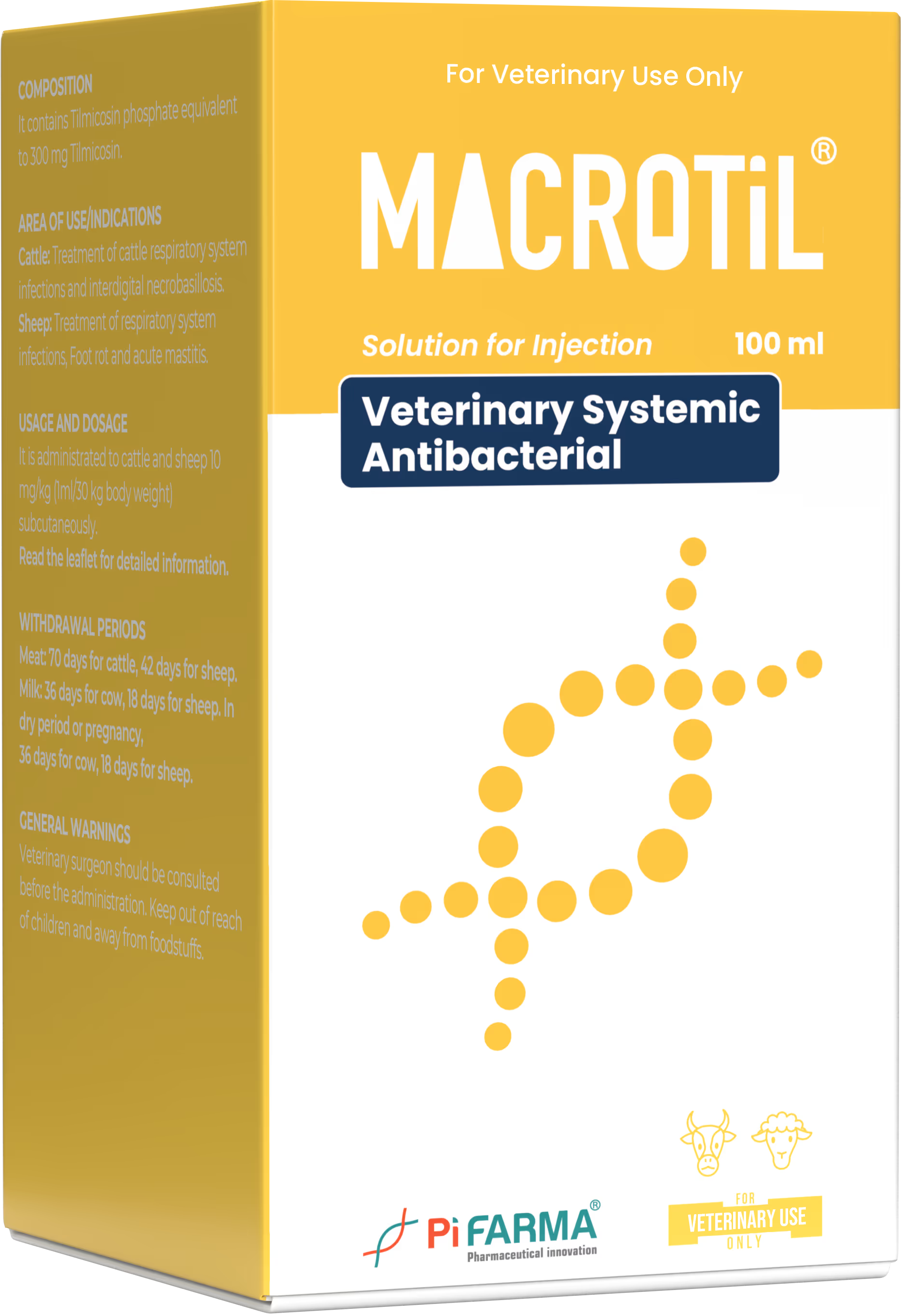
| Product Group | : | Antibacterials |
| Pharmaceutical Form | : | Solution for Injection |
| Active Ingredient | : | Tilmicosin Phosphate |
| Target Species | : | Cattle, Sheep |
| Package Form | : | 100 - 250 ml |
For Veterinary Use Only
For Veterinary Use Only
Solution for Injection
Veterinary Systemic Antibacterial
COMPOSITION
Macrotil Solution for Injection is a light yellow-amber colored, clear sterile solution containing Tilmicosin phosphate equivalent to 300 mg Tilmicosin.
PHARMACOLOGICAL PROPERTIES
Pharmacodynamic Properties
Tilmicosin is a semi-synthetic macrolide antibiotic. It is thought to show an effect by affecting protein synthesis. It has bacteriostatic effect but shows bactericidal effect in high concentration. Effective against some gram-negative bacteria and Mycoplasma, primarily gram-positive bacteria. It is especially effective against the following bacteria of bovine and sheep origin: Mannheimia, Pasteurella, Actinomyces (Corynebacterium), Fusobacterium, Dichelobacter, Staphylococcus and Mycoplasma. Respiratory disease in cattle, the MIC values on field strains isolated in 2009-2012 in Europe are as follows.
|
Bacteria |
MIC (μg/ml) |
MIC50 (μg/ml) |
MIC90 (μg/ml) |
|
P. multocida |
0.5- > 64 |
4 |
8 |
|
M. haemolytica |
1 - 64 |
8 |
16 |
Institute of Clinical and Laboratory Standards identified the tilmicosin values for M. haemolyica caused cattle respiratory system disease as ≤8μg/ml = sensitive, 16 μg/ml = moderately sensitive and ≥ 32 μg/ml = resistant. Although there is no criteria for P. multocida of bovine origin, the tilmicosin values for these bacteria of pig origin are as follows: ≤16 μg/ml = sensitive and ≥ 32 μg/ml = resistant.
Scientific studies have shown that macrolides have synergy with the host defense system. Macrolides increase the ability of phagocytes to destroy bacteria.
The target organ for toxicity after oral or parenteral administration is the heart. The primary cardiac effect is tachycardia and the negative inotropic effect. Cardiovascular toxicity is due to blockade of calcium channels.
CaCl2 treatment in dogs showed a positive effect on the inotropic effect in the left ventricle after effects on vascular blood pressure and pulse after tilmicosin administration.
Dobutamine partially balanced the negative inotropic effect from tilmicosin in dogs. Beta adrenergic antagonists such as propanolol exacerbate the negative inotropic effect of tilmicosin in dogs.
Intramuscular administration at a dose of 10 mg/kg caused an increase in respiratory rate, non-absorption and convulsions, administration at a dose of 20 mg/kg caused death in 3 of 4 pigs, and administration at a dose of 30 mg/kg caused death in 4 animals tested in pigs.
Intravenous administration of 4,5 – 5,6 mg/kg tilmicosin after 2-6 times intravenous administration of 1 ml of epinephrine (1/1000) caused the death of all 6 animals tested. No mortality was observed in animals not administered epinephrine. These results indicate that intravenous administration of epinephrine is contraindicated.
Cross-resistance has been observed between tilmicosin and other macrolides and lincomycin.
Pharmacokinetic Properties
The kinetic parameters of the application with the recommended dose and route are as follows;
|
|
Dose |
Tmax |
Cmax |
|
Cattle: Neonatal calf Beef cattle |
10 mg/kg 10 mg/kg |
1 hour 1 hour |
1.55 µg/ml 0.97 µg/ml |
|
Sheep: 40 kg 28-50 kg |
10 mg/kg 10 mg/kg |
8 hours 8 hours |
0.44 µg/ml 1.18 µg/ml |
After subcutaneous administration, tilmicosin is distributed throughout the body, but reaches a high concentration, especially in the lung. It is converted to numerous metabolites, mainly N-demethyl tilmicosine. But it is mainly excreted unchanged. It is excreted mainly in the bile duct and thus in the feces, and to a lesser extent in the urine. The half-life in cattle is 2-3 days.
AREA OF USE/INDICATIONS
Cattle: treatment of cattle respiratory system infections caused by Mannheimia haemolytica and Pasteurella multocida, treatment of interdigital necrobasillosis.
Sheep: treatment of respiratory system infections caused by Mannheimia haemolytica and Pasteurella multocida, treatment of Foot rot caused by Dichelobacter nodosus and Fusobacterium necrophorum and treatment of acute mastitis caused by Staphylococcus aureus and Mycoplasma agalactia.
USAGE AND DOSAGE
It is administrated 10 mg/kg (1ml/30 kg body weight) subcutaneously.
Cattle:
Administration Method: Take the required amount of product from the bottle with the syringe, leave the needle in the bottle and separate the syringe from the needle. If animals will be treated in groups, leave the needle in the bottle so that later doses can be drawn into the syringe.
Completely hold the animal to be treated and insert another needle subcutaneously at the injection site (preferably in a skin fold behind the shoulder and above the rib cage). Insert the syringe into the needle and inject the product. It should not be applied to injection side more than 20 ml.
Sheep:
Precise weight measurement of lambs is extremely important to avoid overdose. The use of a syringe with a volume of 2 ml or less can be used to ensure correct dosing. Take the required amount of product from the bottle with the syringe, leave the needle in the bottle and separate the syringe from the needle. Having firmly restrained the animal, insert another needle subcutaneously into the injection site (preferably in a skin fold behind the shoulder and above the rib cage).
Insert the syringe into the needle and inject the product. It should not be applied to injection side more than 2 ml. If there is no healing within 48 hours, the diagnosis should be reviewed.
Take necessary precautions to avoid contamination of the bottle during use. The bottle should be visually inspected for any particles or abnormal physical appearance, if these are found, the product should not be used.
SPECIAL CLINICAL INFORMATION AND SPECIAL WARNINGS FOR TARGET SPECIES
Sheep: Clinical studies could not prove bacteriological treatment of tilmicosin in acute mastitis caused by Staphylococcus aureus and Mycoplasma agalactiae in sheep.
It should not be administered to sheep less than 15 kg because of the risk of overdose toxicity. Exact measurement of the weight of the animals is very important to avoid overdose in lambs. The use of a syringe with a volume of 2 ml or less can make easier accurate dosing.
Official, regional and national antimicrobial policies should be considered in the use of this product. Use of this product should be based, as far as possible, on the results of susceptibility tests.
Use during pregnancy and lactation: Safety use of this product in pregnancy has not been proved. It is applied only according to the benefit/risk assessment of the veterinarian.
ADVERSE EFFECTS
Rarely, swelling may occur at the injection site, which disappears within 5-8 days. Very rarely, lying, incoordination and convulsions have been observed. 72 hours intervals 5 mg/kg subcutaneous administration and intravenous administration caused to death.
20 mg/kg intramuscular administration in pigs and 7,5 mg/kg single intravenous administration in sheep caused to death.
DRUG INTERACTIONS
There is interaction between macrolides and ionophores. Do not mix with the other products.
SYMPTOMS OF OVERDOSE, PRECAUTIONS AND ANTIDOTE
72 hours intervals, 10, 30 and 50 mg/kg subcutaneous administration did not cause to death. Edema occurred at the injection sites. Myocardial necrosis was observed in one animal in the 50 mg/kg group.
72 hours intervals 150 mg/kg subcutaneous administration cause to death. In this application, edema at the injection site and mild myocardial necrosis were observed. Other side effects are difficulty in movement, decreased appetite and tachycardia.
A single dose of 30 mg/kg in sheep caused a slight increase in respiration. Administration at a dose of 150 mg/kg caused ataxia, lethargy, and inability to lift the head. 5 mg/kg single intravenous administration in cattle and 7.5 mg/kg in sheep resulted in death.
WITHDRAWAL PERIOD
Meat: 70 days for cattle, 42 days for sheep.
Milk: 36 days for cow, 18 days for sheep. In dry period or pregnancy, 36 days for cow, 18 days for sheep.
CONTRAINDICATIONS
Do not use intramuscular or intravenous.
Do not use lamb less than 15 kg body weight. Do not administer to primates, pigs, horses, donkeys and goats.
Not applicable to animals known to be sensitive to components.
GENERAL WARNINGS
Veterinary surgeon should be consulted before the administration. Keep out of reach of children and away from foodstuffs.
PRECAUTIONS TO BE TAKEN BY THE ADMINISTRATOR AND WARNINGS FOR VETERINARY SURGEON
INJECTION OF TILMICOSIN TO HUMAN CAN CAUSE TO DEATH. TAKE MAXIMUM CAUTION TO AVOID ACCIDENTAL INJECTION TO YOURSELF OR ANOTHER PERSON AND FOLLOW THE FOLLOWING INSTRUCTIONS PERFECTLY.
· This product should only be administered by a veterinary surgeon.
· Never carry a syringe loaded Macrotil with needle attached. The needle should only be connected to the syringe only when filling the syringe or administering the injection. Keep the syringe and needle separate at all other times.
· Do not use automatic injection equipment.
· Ensure that animals are properly restrained, including those in the vicinity.
· Do not work alone when using Macrotil.
· In case of self-injection SEEK IMMEDIATE MEDICAL ATTENTION and take the vial or the package leaflet with you. Apply a cold pack (not ice directly) to the injection site.
Additional operator safety warnings:
• Avoid contact with skin and eyes. Rinse any splashes from skin and eyes immediately with water.
• May cause sensitisation by skin contact. Wash hands after use.
NOTE TO THE PHYSICIAN
INJECTION OF TILMICOSIN IN HUMANS HAS BEEN ASSOCIATED WITH FATALITIES.
The cardiovascular system is the target of toxicity, and this toxicity may be due to calcium channel blockade. Administration of intravenous calcium chloride should only be considered if there is positive confirmation of exposure to tilmicosin.
In dog studies, tilmicosin induced a negative inotropic effect with consequent tachycardia, and a reduction in systemic arterial blood pressure and arterial pulse pressure.
DO NOT GIVE ADRENALIN OR BETA-ADRENERGIC ANTAGONISTS SUCH AS PROPRANOLOL
In pigs, tilmicosin-induced lethality is potentiated by adrenalin.
In dogs, treatment with intravenous calcium chloride showed a positive effect on the left ventricular inotropic state and some improvements in vascular blood pressure and tachycardia.
Pre-clinical data and an isolated clinical report suggest that calcium chloride infusion may help to reverse tilmicosin induced changes in blood pressure and heart rate in humans.
Administration of dobutamine should also be considered due to its positive inotropic effects although it does not influence tachycardia.
As tilmicosin persists in tissues for several days, the cardiovascular system should be closely monitored and supportive treatment provided.
Physicians treating patients exposed to this compound are advised to discuss clinical management with the National Poison Information (National Poison Information telephone no.: 114; Cemal Gürsel Cad. No: 18 Sıhhiye/ANKARA; [email protected]).
STORAGE CONDITIONS AND SHELF LIFE
It should be stored below 25°C in the original package, without being frozen or placed in the refrigerator. Shelf life is 2 years.
WARNINGS FOR DISPOSAL AND NON-TARGET SPECIES
Unused or leftover product must be disposed of according to the relevant legislation. The product must not be disposed of in or near waste water, water sources or drainage systems.
COMMERCIAL PRESENTATION FORM
Offered for sale 100 ml and 500 ml amber colored glass vials with cardboard boxes.
PLACE AND CONDITIONS OF SALE
Sold with Veterinary Surgeon’s prescription in pharmacies, veterinary clinics, polyclinics and animal hospitals (VSP).
APPROVAL DATE OF THE PACKGAGE INSERT: 19.10.2022
MARKETING AUTHORIZATION DATE AND NO:12.03.2012 – 025/0061
MARKETING AUTHORIZATION HOLDER
Pİ FARMA İLAÇ SAN. VE TİC. A.Ş.
Malıköy Başkent OSB Mah. 26. Cad. No:34/A Sincan/Ankara-Türkiye
MANUFACTURER COMPANY
1- Pİ FARMA İLAÇ SAN. VE TİC. A.Ş.
Malıköy Başkent OSB Mah. 26. Cad. No:34/A Sincan/Ankara-Türkiye
2- FDN İLAÇ SAN. VE TİC. LTD. ŞTİ.
Büyükkayacık OSB Mah. İnsu Sokak No:3 Selçuklu/Konya-Türkiye