| - | - | - |
|---|---|---|
| Product Group | : | Antibacterials |
| Pharmaceutical Form | : | Solution for Injection |
| Active Ingredient | : | Florfenicol |
| Target Species | : | Cattle |
| Package Form | : | 100 - 250 ml |
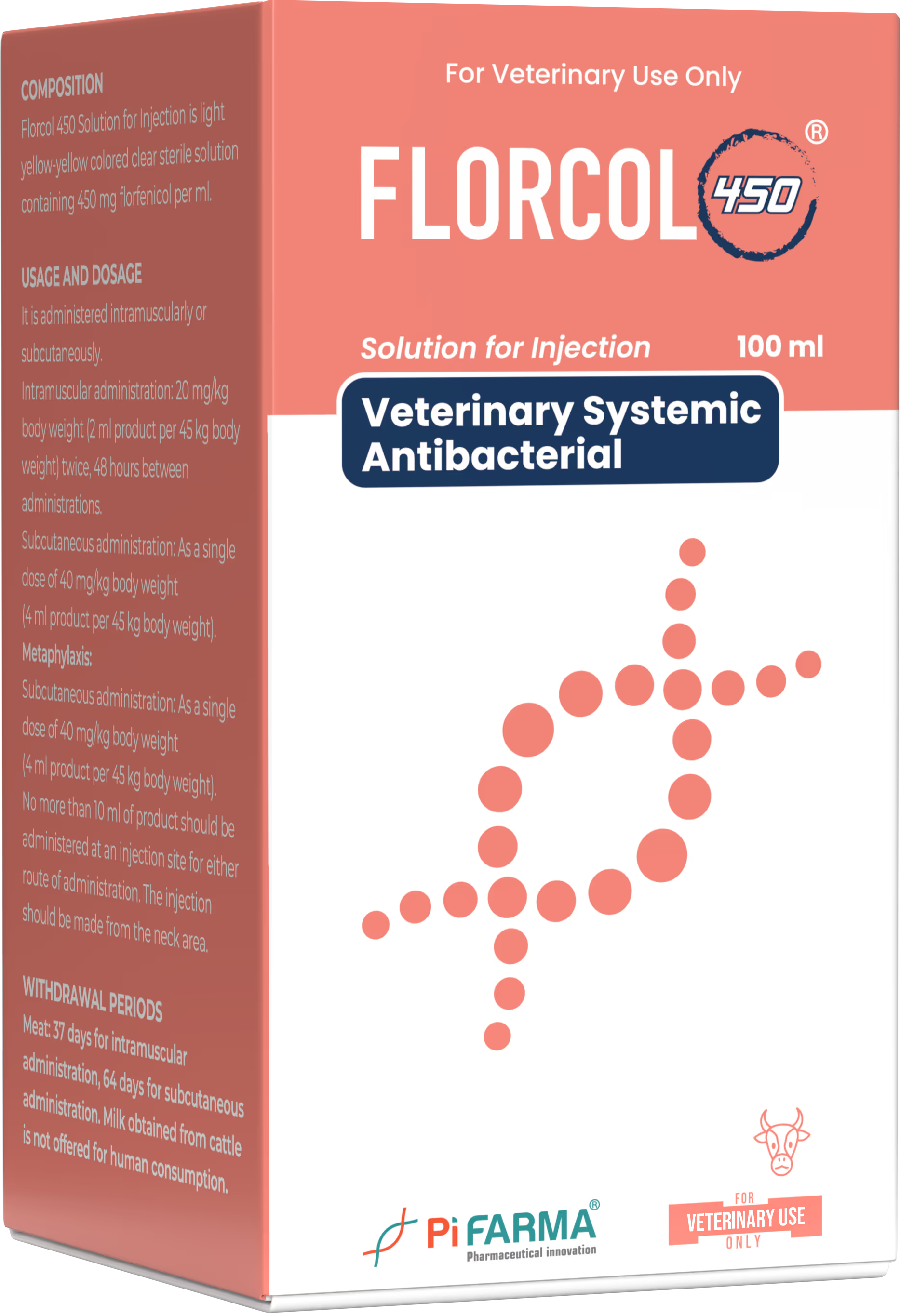
For Veterinary Use Only
For Veterinary Use Only
Solution for Injection
Veterinary Systemic Antibacterial
COMPOSITION
Florcol 450 Solution for Injection is light yellow-yellow colored clear sterile solution containing 450 mg florfenicol and 490 mg N-methyl-2-pyyrolidone per ml.
PHARMACOLOGICAL PROPERTIES
Pharmacodynamic Properties
Florfenicol is a broad-spectrum synthetic antibiotic effective against most Gram-positive and Gram-negative bacteria isolated from domestic animals. Florfenicol has a bacteriostatic effect by inhibiting protein synthesis at the ribosomal level. Laboratory studies show that florfenicol is effective against bacteria that cause respiratory tract infections in cattle, including Mannheimia haemolytica, Pasteurella multocida, and Histophilus somni.
Although florfenicol is considered as a bacteriostatic antibiotic, in vitro studies show that it is bactericidal against Mannheimia haemolytica, Pasteurella multocida and Histophilus somni.
Unlike chloramphenicol, florfenicol does not carry a dose-related risk of aplastic anemia in humans.
The common mechanism of transacetylation resistance to chloramphenicol and thiamphenicol is probably less involved in the development of resistance to florfenicol.
Acquired resistance to florfenicol is mediated by the efflux pump resistance associated with the flor gene. This type of resistance has been identified in the target pathogens Pasteurella multocida and Mannhemia haemolytica. Cross-resistance may occur with chloramphenicol. Resistance to florfenicol and other antibiotics has been identified in Salmonella typhimurium, a foodborne pathogen. Co-resistance with third generation cephalosporins has been observed in respiratory and digestive Escherichia coli.
Pharmacokinetics Properties
After parenteral administration it is excreted mainly in the urine and to a lesser extent in the feces, mainly as the parent compound and then as florfenicol amine and florfenicol oxamide acid.
When administered subcutaneously in cattle at a dose of 40 mg/kg subcutaneously, the effective plasma levels of florfenicol MIC90 of 0.5 µg/ml and 1.0 µg/ml are maintained for 90.7 and 33.8 hours, respectively. The Cmax value of 1.8 µg/ml is achieved 7 hours after administration.
When administered subcutaneously at a dose of 20 mg/kg by intramuscular route in cattle, the effective plasma levels of florfenicol MIC90 of 0.5 µg/ml and 1.0 µg/ml are maintained for 48.7 and 30.3 hours, respectively. The Cmax value of 3.0 µg/ml is achieved 6 hours after administration.
AREA OF USE / INDICATIONS
Cattle:
Treatment and metaphylaxis of respiratory tract infections caused by florfenicol-susceptible strains of Mannheimia haemolytica, Pasteurella multocida and Histophilus somni.
Before metaphylactic use, the presence of disease in the herd should be ensured.
USAGE AND DOSAGE
Treatment:
It is administered intramuscularly or subcutaneously.
Intramuscular administration: 20 mg/kg body weight (2 ml product per 45 kg body weight) twice, 48 hours between administrations.
Subcutaneous administration: As a single dose at a dose of 40 mg/kg body weight (4 ml product per 45 kg body weight).
Metaphylaxis:
Subcutaneous administration: As a single dose at a dose of 40 mg/kg body weight (4 ml product per 45 kg body weight).
No more than 10 ml of product should be administered at an injection site for either route of administration. The injection should be made from the neck area.
The body weight of the animal should be calculated as accurately as possible to avoid giving less than the recommended dose.
It is recommended to treat animals in the early stage of infections and monitor the response to treatment within 48 hours after the second injection. If clinical signs persist or general condition worsens within 48 hours after the second injection, further treatment should be considered.
Clean the cover before each use. Use dry and sterile needles and syringes. Use a 16 gauge needle.
Do not pierce the rubber stopper more than 50 times.
SPECIAL CLINICAL INFORMATION AND SPECIAL WARNINGS FOR TARGET SPECIES
Use this product according to the results of susceptibility tests for bacteria obtained from animals. If this is not possible, use according to regional epidemiological information regarding the susceptibility of target bacteria.
In practice, national and regional antimicrobial policies should be taken into account.
Failure to use this product in accordance with the directions outlined in the summary of product characteristics may result in the growth of bacteria resistant to florfenicol and reduced efficacy of other antimicrobials due to possible cross-resistance.
To avoid repeated and prolonged use of medicinal products, good management practices, cleanliness and hygiene on farms and elimination of stress conditions in animals are recommended.
Usage during pregnancy and lactation: The safety of this product in cattle during pregnancy, lactation or in breeding animals has not been established. Laboratory studies in rabbits and rats with the excipient N-methylpyrrolidone have shown evidence of foetotoxic effects. It should only be used based on a benefit-risk assessment by a responsible veterinary surgeon.
UNDESIRED EFFECTS
Cattle: A decrease in feed consumption and soft stools can be seen during treatment in cattle. After the end of treatment, these symptoms disappear quickly and completely.
The maximum recommended dose of 10 ml for subcutaneous administration may cause pain and significant swelling at the injection site. The pain may take for days. Swelling at the injection site decreases over time but may persist for up to 61 days.
The maximum recommended dose of 10 ml for intramuscular administration may cause pain and significant swelling at the injection site. The pain may take for days. Swelling at the injection site decreases over time but may persist for up to 24 days.
Inflammatory lesions at the injection site can be seen up to day 37 at necropsy.
DRUG INTERACTIONS
Not known.
SYMPTOMS OF OVERDOSE, PRECAUTIONS AND ANTIDOTE
Not known.
WITHDRAWAL PERIODS
Meat: 37 days for intramuscular administration, 64 days for subcutaneous administration. Milk obtained from cattle is not offered for human consumption.
CONTRAINDICTAIONS
It is not used in adult rams and bulls used as breeders.
Not for use in animals with hypersensitivity or allergic reaction to florfenicol or excipients.
GENERAL WARNINGS
Consult your veterinarian before use and in case of an unexpected effect. Keep out of reach of children
PRECAUTIONS TO BE TAKEN BY THE ADMINISTRATOR AND WARNINGS FOR VETERINARY SURGEON
Persons with hypersensitivity or allergic reaction to florfenicol or its excipients should not come into contact with the product.
Avoid accidental self-injection. In case of self-injection, consult a doctor immediately along with the product and the package insert.
Avoid contact with eyes and skin. In case of accidental exposure, wash the area with plenty of water. Wash your hands after use.
Laboratory studies conducted in rabbits and rats with the excipient N-methylpyrrolidone have shown evidence of foetotoxic effects. Women of childbearing age, pregnant women, or women who may be pregnant should take the utmost care to avoid accidental self-injection and contact with the product and should take all necessary precautions.
STORAGE CONDITIONS AND SHELF LIFE
It should be stored under 25°C in the original package, without being frozen or placed in the refrigerator. Protect from sunlight. Shelf life is 2 years from the date of manufacture and 28 days from first use.
COMMERCIAL PRESENTATION FORM
Offered for sale in 100 ml colorless glass vials with 20 mm grey bromobutyl rubber stoppers and 20 mm printed flip-off colorless caps, and 250 ml colorless glass vials with 32 mm grey bromobutyl rubber stoppers and 32 mm printed flip-off colorless caps vials in cardboard box.
PLACE AND CONDITIONS OF SALE
Sold with veterinary surgeon’s prescription in pharmacies and veterinary surgeries (VSP).
APPROVAL DATE OF THE PACKGAGE INSERT: 24.06.2025
MARKETING AUTHORIZATION DATE AND NO: 18.10.2012-026/0058
MARKETING AUTHORIZATION HOLDER
Pİ FARMA İLAÇ SAN. VE TİC. A.Ş.
Malıköy Başkent OSB Mah. 26. Cad. No:34/A Sincan/Ankara-Türkiye
MANUFACTURER COMPANY
1- Pİ FARMA İLAÇ SAN. VE TİC. A.Ş.
Malıköy Başkent OSB Mah. 26. Cad. No:34/A Sincan/Ankara-Türkiye
2- FDN İLAÇ SAN. VE TİC. LTD. ŞTİ.
Büyükkayacık OSB Mah. İnsu Sokak No:3 Selçuklu/Konya-Türkiye
Made in Turkiye