| - | - | - |
|---|---|---|
| Product Group | : | Anti-Inflammatory |
| Pharmaceutical Form | : | Solution for Injection |
| Active Ingredient | : | Carprofen |
| Target Species | : | Cattle |
| Package Form | : | 50 - 100 ml |
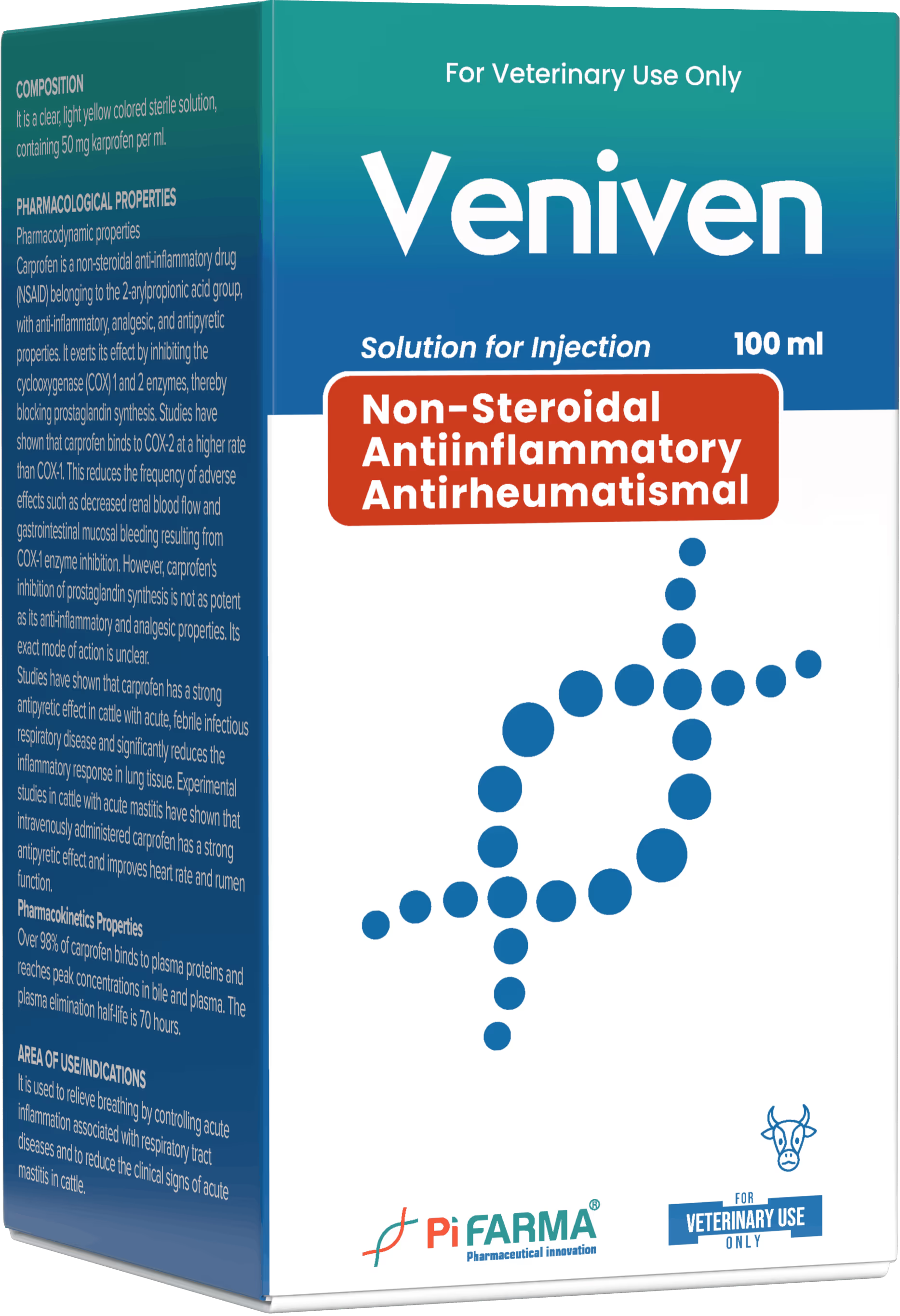
For Veterinary Use Only
For Animal Use Only
VENİVEN
Solution For Injection
Veterinary Non-steroidal Antiinflamatuar - Antirheumatismal
COMPOSITION
It is a clear, light yellow colored sterile solution, containing 50 mg carprofen per ml.
PHARMACOLOGICAL PROPERTIES
Pharmacodynamic Properties
Carprofen is a non-steroidal anti-inflammatory drug (NSAID) belonging to the 2-arylpropionic acid group, with anti-inflammatory, analgesic, and antipyretic properties. It exerts its effect by inhibiting the cyclooxygenase (COX) 1 and 2 enzymes, thereby blocking prostaglandin synthesis. Studies have shown that carprofen binds to COX-2 at a higher rate than COX-1. This reduces the frequency of adverse effects such as decreased renal blood flow and gastrointestinal mucosal bleeding resulting from COX-1 enzyme inhibition. However, carprofen's inhibition of prostaglandin synthesis is not as potent as its anti-inflammatory and analgesic properties. Its exact mode of action is unclear. Studies have shown that carprofen has a strong antipyretic effect in cattle with acute, febrile infectious respiratory disease and significantly reduces the inflammatory response in lung tissue. Experimental studies in cattle with acute mastitis have shown that intravenously administered carprofen has a strong antipyretic effect and improves heart rate and rumen function.
Pharmacokinetics Properties
Following subcutaneous administration of a 1.4 mg/kg dose, a maximum plasma concentration (Cmax) of 15.4 µg/ml is reached within 7-19 hours (Tmax). Over 98% of carprofen binds to plasma proteins and reaches peak concentrations in bile and plasma. Carprofen distributes well into tissues, with peak concentrations found in the kidney and liver, followed by adipose and muscle tissue. Carprofen is present as the major component in all tissues. The main component of carprofen is slowly metabolized primarily by hydroxylation, hydroxylation at the α-carbon, and conjugation of the carboxylic acid group with glucuronic acid. The 8-hydroxy metabolite and unmetabolized carprofen are predominantly found in feces. Conjugated carprofen is found in bile samples. The plasma elimination half-life is 70 hours. Carprofen passes into the gastrointestinal tract via the bile duct and enters the enterohepatic circulation, where it is largely excreted in the feces and, to a lesser extent, in the urine.
AREA OF USE/INDICATIONS
It is used to relieve breathing by controlling acute inflammation associated with respiratory tract diseases and to reduce the clinical signs of acute mastitis in cattle.
USAGE AND DOSAGE
Pharmacological Dose: 1,4 mg/kg body weight (1 ml/35 kg) subcutaneously or intravenously in cattle.
Practical Dose:
|
Target Species |
Body weight |
Veniven Sol. For Inj. |
Administration Route |
|
Cattle |
140 kg |
4 ml |
Subcutaneously / Intravenously |
SPECIAL CLINICAL INFORMATION AND SPECIAL WARNINGS FOR TARGET SPECIES
In general, NSAIDs can increase the tendency to bleed, especially in sensitive animals, because they inhibit the activity of thromboxane synthase, one of the mechanisms involved in blood clotting. Although studies conducted on cats and dogs before and after surgery have yielded successful results, NSAIDs should be used before and after surgery by a veterinarian, taking into account the benefits and risks, due to their effects on gastrointestinal ulcers and blood clotting.
Follow aseptic and antiseptic rules when using the product. It should not be administered simultaneously or within 24 hours with another NSAID. Do not use the product if there is a color change.
For effective treatment of infection-related diseases, the causative agent of the disease should be identified and treated with an appropriate antimicrobial.
Clinical studies have shown that carprofen has antipyretic activity and, when used with an antimicrobial appropriate for the infectious agent in cattle with respiratory tract infections, provides significant improvement in respiratory function.
The specified doses should not be exceeded.
It should not be administered in cases of dehydration, hypovolemia, or hypotension, as it may cause renal toxicity.
Intravenous administration should only be performed intravenously and slowly. Administration should be stopped immediately if neurological and cardiovascular signs appear during administration.
Use in animals younger than six weeks and in elderly animals may pose additional risks. When administration to such animals is necessary, the dosage should be reduced and carefully monitored throughout the treatment period.
Use during pregnancy and lactation: Since there are no studies on its use in pregnant and lactating animals, it should not be used in animals during this period.
ADVERSE EFFECTS
In some cattle treated with the drug, nodules may form at the injection site without fever or pain. These nodules are related to the trauma caused by the needle and are seen in a small number of animals.
DRUG INTERACTIONS
In clinical studies conducted in cattle, macrolides, tetracyclines, cephalosporins, and enhanced penicillin group antibiotics were also administered to animals treated with carprofen, and no side effects were observed.
As with other NSAIDs, carprofen should not be administered simultaneously with another veterinary medicinal product belonging to the NSAID or glucocorticoid class. NSAIDs bind to plasma proteins to a high degree and may compete with other drugs used concomitantly, thus their combined administration may cause toxic effects. They should not be mixed with other drugs (in the same syringe or infusion).
SYMPTOMS OF OVERDOSE, PRECAUTIONS AND ANTIDOTE
In clinical studies, no side effects were observed after administration of 5 times the recommended intravenous and subcutaneous dose. There is no specific antidote for carprofen overdose. However, as with other NSAIDs, general supportive treatment should be administered.
WITHDRAWAL PERIODS
Meat: 21 days for cattle.
Milk: 0 days.
CONTRAINDICATIONS
Do not use in animals with heart, liver, or kidney disease, those at risk of gastrointestinal ulceration or bleeding, those with abnormal blood cell counts (blood dyscrasia), or those known to be hypersensitive to the product.
GENERAL WARNINGS
Consult a veterinarian before use and if any unexpected effects occur. Keep out of reach of children and away from foodstuffs.
PRECAUTIONS TO BE TAKEN BY THE ADMINISTRATOR AND WARNINGS FOR VETERINARY SURGEON
Veniven Injection Solution should not be accidentally self-injected, and contact with the eyes and skin should be avoided. If contact occurs, the affected area should be washed thoroughly with water. The application should be performed in accordance with general aseptic rules using the necessary protective equipment. Individuals who are hypersensitive to any of the active or auxiliary ingredients should not come into contact with the drug. If sensitive individuals experience symptoms such as tachycardia, difficulty breathing, or swelling of the hands and face, they should seek immediate medical assistance and refer to the drug label and package insert. Do not eat, drink, or smoke while administering the product.
STORAGE CONDITIONS AND SHELF LIFE
Before and after opening, the product should be stored below 25°C, in the original packages, without being frozen or placed in the refrigerator. Protect from sunlight. Shelf life is 3 years. It should be consumed within 28 days after opening. The product's stopper can be punctured a maximum of 30 times.
DISPOSAL AFTER USE AND WARNINGS FOR NON-TARGET SPECIES
Empty and used bottles should be disposed of in accordance with the local authority's regulations governing the disposal of such materials. Unused product should not be disposed of in wastewater or drainage systems.
COMMERCIAL PRESENTATION FORM
50 ml and 100 ml amber-colored glass vials with cardboard boxes.
PLACE AND CONDITIONS OF SALE
It is sold in pharmacies and veterinary clinics with a veterinarian's prescription. (VHP)
APPROVAL DATE OF LEAFLET: 08.02.2018
MARKETING AUTHORIZATION DATE AND NO: 08.02.2018 – 027/0087
MARKETING AUTHORIZATION HOLDER
Pİ FARMA İLAÇ SAN. VE TİC. A.Ş.
Malıköy Başkent OSB Mah. 26. Cad. No:34/A Sincan/Ankara-Türkiye
MANUFACTURER COMPANY
FDN İLAÇ SAN. ve TİC. LTD. ŞTİ.
Büyükkayacık OSB Mah. İnsu Sokak No:3 Selçuklu/Konya-Türkiye
Made in Turkiye