| - | - | - |
|---|---|---|
| Product Group | : | Anti-Inflammatory |
| Pharmaceutical Form | : | Solution for Injection |
| Active Ingredient | : | Ketoprofen |
| Target Species | : | Cattle, Horse |
| Package Form | : | 50 - 100 - 250 ml |
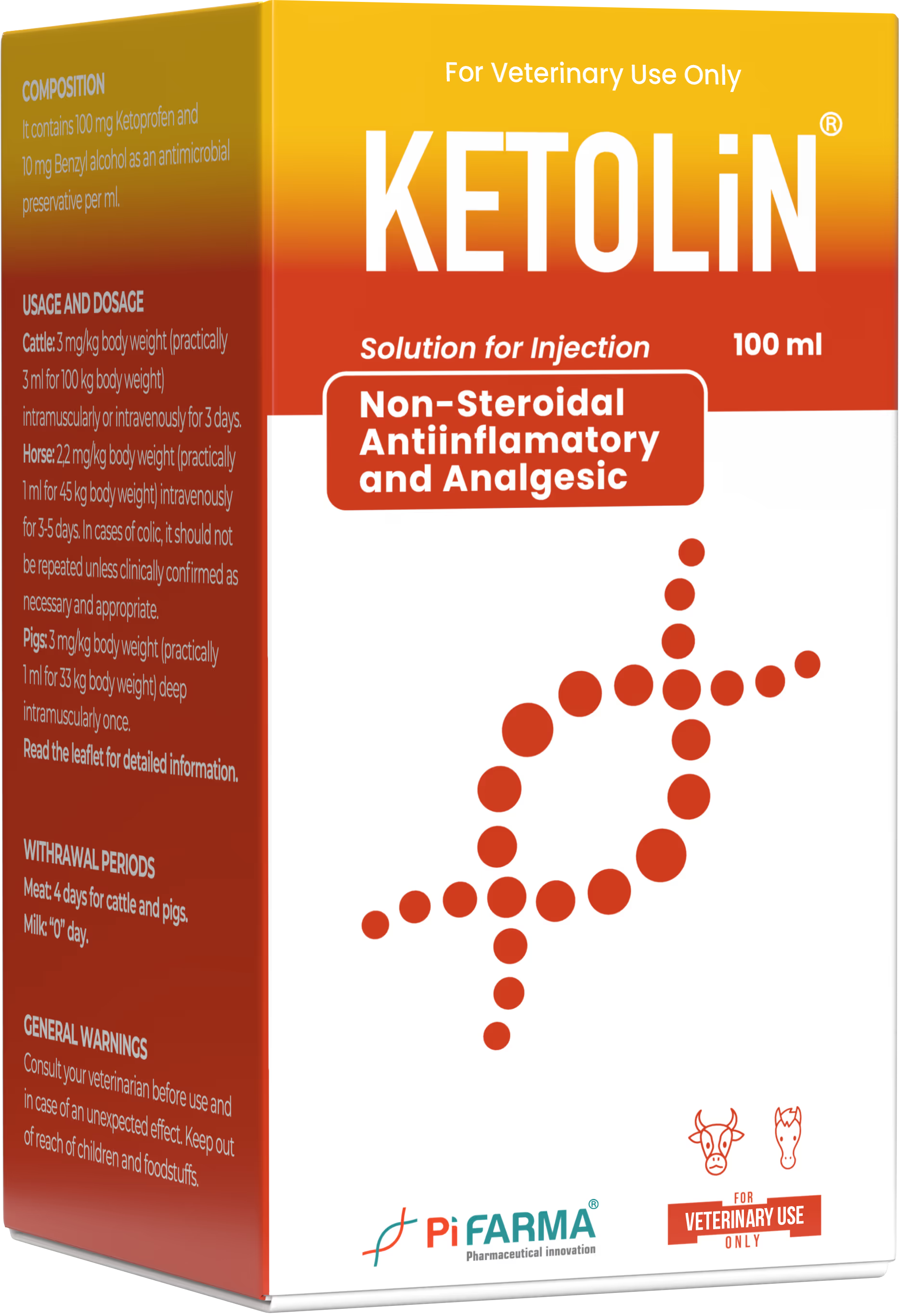
For Veterinary Use Only
For Veterinary Use Only
Solution for Injection
Non-Steroid Anti-Inflammatory and Analgesic
COMPOSITION
Ketolin Solution for Injection is a clear or pale strow-colored solution containing 100 mg Ketoprofen and 10 mg Benzyl alcohol as an antimicrobial preservative per ml.
PHARMACOLOGICAL PROPERTIES
Pharmacodynamic Properties
Ketoprofen is a non-steroidal antiinflamatory drug. It also has antipyretic and analgesic effects addition to its anti-inflammatory effect. Not all modes of action are fully known. The pharmacologic mechanism of action of ketoprofen is based on partial inhibition of prostaglandin and leukotrin synthesis by acting on cyclo-oxygenase and lipoxygenase. Ketoprofen also suppresses bradykinin formation and platelet aggregation, stabilizes the cell membranes of lysosomes, which in turn inhibits the release of lysosomal enzymes that mediate tissue destruction.
Pharmacokinetics Properties
After intravenous injection in horses, the half-life is approximately 1 hour, the volume of distribution is approximately 0.17 l/kg and the clearance is approximately 0.3 l/kg. After intramuscular injection in cattle and pigs, ketoprofen is rapidly absorbed and the maximum plasma concentration of approximately 11 micrograms/ml is achieved between ½ and 1 hour. The average absorption time is approximately 1 hour and the plasma half-life is 2 - 2 ½ hours. Bioavailability after intramuscular injection is 90 - 100% in cattle and pigs. In case of repeated injections at 24-hour intervals, ketoprofen exhibits linear and constant kinetics, as the above parameters remain unchanged. Approximately 95% of ketoprofen is bound to plasma proteins.
Ketoprofen is metabolized mainly by reduction of the ketone group to a major metabolite. Ketoprofen is rapidly excreted; approximately 80% is eliminated within 12 hours after administration. 90% of elimination occurs through the kidneys, mainly in the metabolized form.
USE OF AREA / INDICATIONS
Cattle, It is used for the supportive teatment of labor-related labor paralysis, to relieve pain and fever in bacterial respiratory tract infections with appropriate etiological treatment, to promote healing in acute clinical mastitis, including acute endotoxic mastitis caused by Gram-negative bacteria with appropriate etiological treatment, to relieve breast edema due to labour, in osteoarticular and musculoskeletal system pain, to facilitate postpartum ambulation.
Horse, It is used for the diseases affecting the osteoarticular and musculoskeletal system related to acute pain and inflammation: Lameness of traumatic origin, Arthritis, Osteitis, Knee swelling, Tendonitis, Bursitis, Naviculitis, Laminitis, Myositis.
It is also used in the symptomatic treatment of postoperative inflammation, colic and fever.
Pigs, It is indicated for reducing the pyrexia and respiratory rate associated with bacterial or viral respiratory disease when used in conjunction with antimicrobial therapy as appropriate;
The supportive treatment of Mastitis Metritis Agalactia Syndrome in sows, in conjunction with antimicrobial therapy as appropriate.
USAGE AND DOSAGE
Cattle: 3 mg/kg body weight (practically 3 ml for 100 kg body weight) intramuscularly or intravenously for 3 days.
Horse: 2,2 mg/kg body weight (practically 1 ml for 45 kg body weight) intravenously for 3-5 days. In cases of colic, it should not be repeated unless clinically confirmed as necessary and appropriate.
No more than 5 ml should be applied to one area for intramuscular applications.
It should be administered 10-30 minutes before the intervention to reduce post-operative pain.
The appropriate injector should be used and body weight should be calculated exactly to avoide overdose.
For cattle, the maximum number of punctures is: 4 times for a 50 ml package, 8 times for a 100 ml package, and 19 times for a 250 ml package. For horses, the maximum number of punctures is: 5 times for a 50 ml package, 10 times for a 100 ml package, and 25 times for a 250 ml package.
Pigs: 3mg/kg body weight (practically 1ml for 33kg body weight) deep intramuscularly once.
SPECIAL CLINICAL INFORMATION AND SPECIAL WARNINGS FOR TARGET SPECIES
Using of the product in animals younger 6 weeks of age and in the elderly involves is more-risky. If use in this group of animals is mandatory, the dose should be reduced and the animals should be kept under observation. Avoid intra-arterial administration.
Do not exceed the specified dose and duration.
Use with caution in dehydrated, hypovolemic and low blood pressure animals due to possible increased renal toxicity.
Additional administration in case of colic should be made only if decided after clinical examination. Care should be taken to ensure that animals have sufficient drinking water during treatment.
Use in pregnancy and lactation: No teratogenic or embryotoxic effects of ketoprofen were observed in safety studies in pregnant experimental animals (rats, mice, rabbits) and pregnant cows.
The product can be administered to pregnant and lactating cows.
Using in pregnant mares is not recommended since the effect of ketoprofen on fertility, pregnancy and fetus in horses has not been studied.
ADVERSE EFFECTS
Very rarely;
· Transient irritation in case of repeated intramuscular administration,
· Gastric and intestinal irritation or ulceration, renal intolerance (due to ketoprofen suppressing prostaglandin synthesis)
· Temporary anorexia after repeated administration in pigs
· Allergic reactions
The following translation is used to report the frequency of side effects.
- very common (more than 1 in 10 animals treated)
- common (more than 1 but less than 10 animals in 100 animals treated)
- uncommon (more than 1 but less than 10 animals in 1,000 animals treated)
- rare (more than 1 but less than 10 animals in 10,000 animals treated)
- - very rare (less than 1 animal in 10,000 animals treated).
DRUG INTERACTIONS
This product should not be used simultaneously or within 24 hours of each other with glucocorticoids and other NSAIDs.
It should not be administered simultaneously with diuretics, nephrotoxic drugs and anticoagulants.
Ketoprofen is highly bound to plasma proteins, so its binding may be affected by other drugs that are highly bound to plasma proteins, such as anticoagulants, or ketoprofen may affect the binding of these products to proteins.
Ketoprofen may inhibit platelet aggregation and cause gastrointestinal ulceration. Therefore, it should not be used concomitantly with other drugs that have this effect.
SYMPTOMS OF OVERDOSE, PRECAUTIONS AND ANTIDOTE
No clinical side effects were observed in horses at 5 times the recommended dose for 15 days and in cattle at 5 times the recommended dose for 5 days.
Ketoprofen can cause hypersensitivity reactions and serious damage to the gastric mucosa. In this case, treatment should be discontinued and symptomatic therapy should be applied.
Overdose of NSAIDs may cause gastrointestinal ulceration, protein loss, hepatic and renal damage. In tolerance studies in pigs, erosive and/or ulcerative lesions were observed in the glandular and aglandular regions of the stomach at 3 times the treatment dose (9 mg/kg) for 3 days and at the treatment dose (3 mg/kg) for 9 days.
Early signs of toxicity are loss of appetite, soft stools and diarrhea.
WITHRAWAL PERIODS
Meat: 4 days for cattle and pigs.
Milk: “0” day.
CONTRENDICATIONS
Do not use in animals known to be sensitive to any substance in its composition.
Do not use in animals with significant loss of liver, heart and kidney function.
Do not use in animals with gastrointestinal lesions, hemorrhagic diathesis, blood dyscrasia.
Do not use in foals under one month of age.
It should not be administered with other NSAIDs or 24 hours before or after the administration of these group drugs.
GENERAL WARNINGS
Consult your veterinarian before use and in case of an unexpected effect. Keep out of reach of children and foodstuffs.
PRECAUTIONS TO BE TAKEN BY THE ADMINISTRATOR AND WARNINGS FOR VETERINARY SURGEON
In case of accidental self-injection, seek immediate medical treatment and show the product leaflet and label to your doctor. People sensitive to Ketoprofen or other excipients should avoid contact with the product. In case of contact with skin or eyes, rinse with plenty of water. If sensitivity persists in contact areas, consult a doctor. Wash your hands after use.
STORAGE CONDITIONS AND SHELF LIFE
It should be stored under 25°C in the original package, without being frozen or placed in the refrigerator. Shelf life is 2 years. It should be consumed within 28 days after the first use.
COMMERCIAL PRESENTATION FORM
Offered for sale in 50 ml and 100 ml Type II amber glass vials with a 20 mm grey bromobutyl rubber stopper and a 20 mm printed flip-off colorless cap, and in 250 ml Type II amber glass vials with a 32 mm grey bromobutyl rubber stopper and a 32 mm printed flip-off colorless cap vials with cardboard boxes.
PLACE AND CONDITIONS OF SALE
Sold with Veterinary Surgeon’s prescription in pharmacies, veterinary clinics, polyclinics and animal hospitals (VSP).
APPROVAL DATE OF THE PACKGAGE INSERT: 16.06.2025
MARKETING AUTHORIZATION DATE AND NO: 08.10.2010 – 023/0039
MARKETING AUTHORIZATION HOLDER
Pİ FARMA İLAÇ SAN. VE TİC. A.Ş.
Malıköy Başkent OSB Mah. 26. Cad. No:34/A Sincan/Ankara-Türkiye
MANUFACTURER COMPANY
1- Pİ FARMA İLAÇ SAN. VE TİC. A.Ş.
Malıköy Başkent OSB Mah. 26. Cad. No:34/A Sincan/Ankara-Türkiye
2- FDN İLAÇ SAN. VE TİC. LTD. ŞTİ.
Büyükkayacık OSB Mah. İnsu Sokak No:3 Selçuklu/Konya-Türkiye