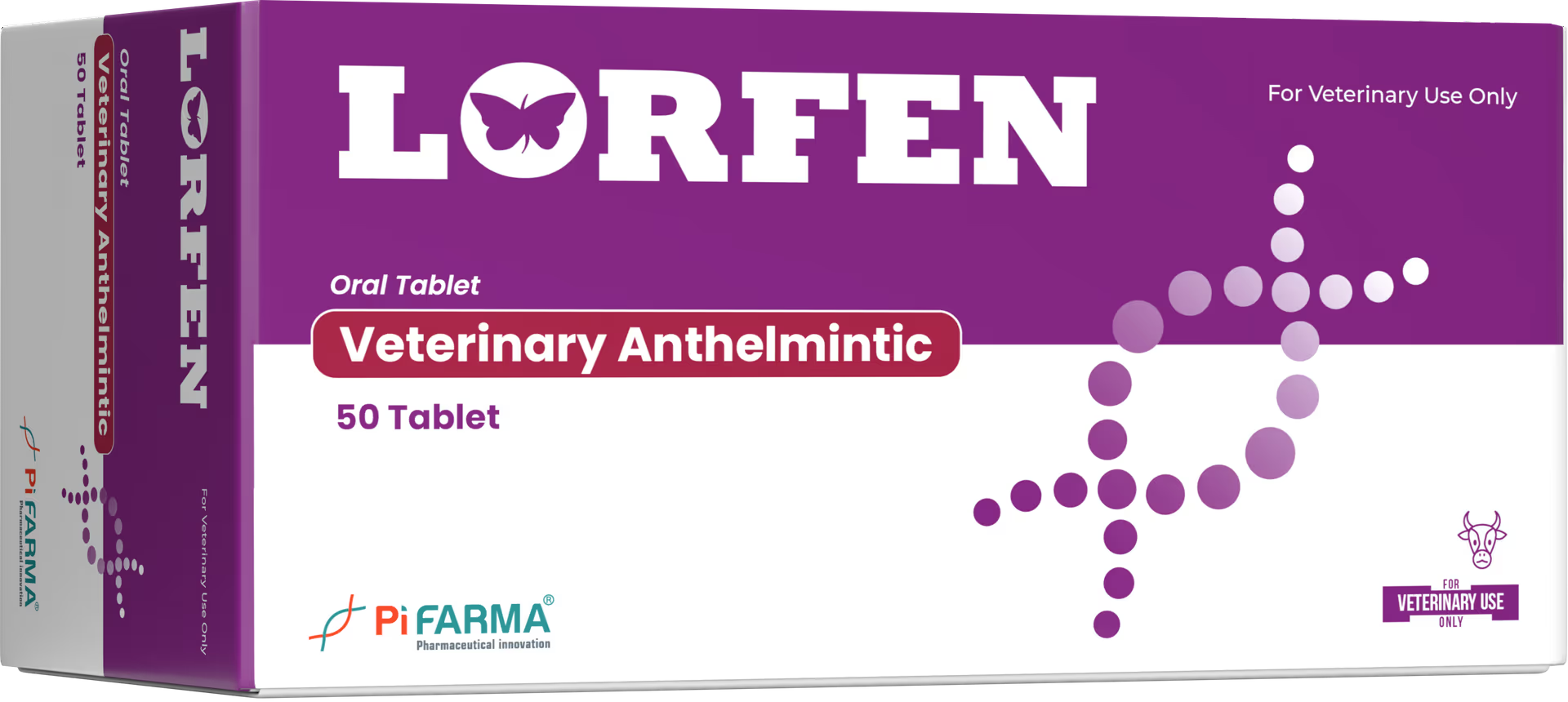
| - | - | - |
|---|---|---|
| Product Group | : | Parasiticides |
| Pharmaceutical Form | : | Oral Tablet |
| Active Ingredient | : | Levamisole HCI, Triclabendazole |
| Target Species | : | Cattle |
| Package Form | : | 50 Tablet |
For Veterinary Use Only
For Veterinary Use Only
LORFEN
Oral Tablet
Veterinary Anthelmintic
COMPOSITION
Lorfen is a white-whitish colored, rectangular tablet with face with notched edges and rounded corners containing 600 mg Triclabendazole and 375 mg Levamizole HCl per tablet.
PHARMACOLOGICAL PROPERTIES
Pharmacodynamic Properties
Lorfen Oral Tablet contains Levamisole HCl, an anthelmintic drug that is an imidazole derivative and the L-isomer of tetramisole. It is effective against lung and gastrointestinal roundworms, ascarids, and tapeworms in cattle.
When administered orally, Levamisole HCl is rapidly absorbed from the digestive tract, reaching peak plasma concentration within 1-2 hours, distributing throughout the body, and maintaining effective concentration for 5 days. Its plasma half-life is 4-6 hours. In ruminants and monogastric animals, 40% of Levamisole HCl is excreted in the urine within 12 hours.
Levamisole HCl inhibits the cholinesterase enzyme in parasites, causing acetylcholine accumulation and, as a result, making muscarinic and nicotinic effects more pronounced, thereby paralyzing the parasite. Levamisole HCl also inhibits the fumarate reductase enzyme at high concentrations, disrupting carbohydrate metabolism.
Pharmacokinetics Properties
Triclabendazole, contained in Lorfen Oral Tablet, is a benzimidazole derivative with fasciolacidal activity, effective against the larval and adult forms of Fasciola hepatica and Fasciola gigantica (liver flukes) that cause fascioliasis in cattle. Although rare, resistance to triclabendazole may be observed in Fasciola species.
It acts by inhibiting the activity of fumarate reductase in parasites. After oral administration, it reaches peak plasma concentration within 8-24 hours, depending on the fullness of the digestive system, and is metabolized in the body after administration, converting to sulfon and sulfoxide derivatives. It accumulates particularly in the liver and thyroid gland. By the end of 10 days following administration, most of the administered dose is excreted from the body, largely via bile in the feces and to a lesser extent in the urine.
AREA OF USE/INDICATIONS
Cattle;
Gastrointestinal pinworms: Haemonchus sp., Oestertagia sp., Trichostrongylus sp., Cooperia sp., Nematodirus sp., Bunostomum sp., Chabertia sp. and Oesophagostomun sp.
Lung pinworms: Dictyocaulus spp. (especially D. filaria)
Liver flukes: F. hepatica, F. gigantica adult and juvenile stages.
USAGE AND DOSAGE
Lorfen is administered 1 tablet for 50 kg body weight for cattle, orally.
Pharmacological dose is 12 mg/kg body weight for Triclabendazole, 7,5 mg/kg body weight for Levamizole.
Practical Dose Table;
|
Cattle |
|
|
Body weight (kg) |
Tablet to be administered |
|
50 kg |
1 tablet |
|
100 kg |
2 tablets |
|
150 kg |
3 tablets |
|
200 kg |
4 tablets |
|
250 kg |
5 tablets |
|
300 kg |
6 tablets |
|
400 kg |
8 tablets |
|
500 kg |
10 tablets |
SPECIAL CLINICAL INFORMATION AND SPECIAL WARNINGS FOR TARGET SPECIES
The following practices should be avoided as they increase the risk of resistance development and may ultimately lead to ineffective treatment:
-Frequent and repeated use of antihelminthics from the same class over a long period of time.
-Under-dosing due to underestimation of body weight or incorrect administration of the product.
Clinical cases suspected of being resistant to anthelmintics should be further investigated using appropriate tests (e.g., Fecal Egg Count Reduction Test - FECRT). When test results indicate strong resistance to a specific anthelmintic, an anthelmintic belonging to a different pharmacological class and with a different mode of action should be used.
It is recommended to apply it at least twice a year, in spring and autumn, as a preventive measure.
To prevent the spread of parasites in pastures, it is recommended to apply the product before going out to pasture and to keep treated animals confined for 8-12 hours to ensure that the ovicidal effect is complete and prevent pasture contamination.
It should not be used in sick or weak animals.
The animal's body weight must be carefully assessed when determining the dose.
Applications in cachectic and severely stressed animals should be monitored closely.
Due to race and herd sensitivity, poisoning and death may occur in goats even at normal doses of levamisole. Levamisole is extremely dangerous for horses. Even a dose of 20 mg/kg body weight can cause death. Levamisole administered orally to cats and dogs causes vomiting at doses of 40-80 mg/kg.
Use during pregnancy and lactation: Although triclabendazole and levamisole are safe for use during pregnancy at the recommended doses, they should not be used during the last 3 months of pregnancy.
ADVERSE EFFECTS
The likelihood of side effects occurring at the recommended doses in cattle is quite low. However, symptoms such as vomiting, salivation, and muscle tremors may rarely develop due to levamisole. Repeated doses may cause fever, muscle pain, and allergic skin reactions.
Since levamisole has a narrow therapeutic index, dosing should be administered with caution.
Skin irritation may develop due to triclabendazole.
DRUG INTERACTIONS
It should not be used concomitantly with piperazine salts due to antagonistic effects. Concomitant use with tetrahydroprimidines (pyrantel and morantel salts) may increase toxicity. It should not be used concomitantly with organophosphorus compounds, phenicols, and diethylcarbamazine due to their nicotinic effects.
It should not be used concomitantly with procaine.
SYMPTHOMS OF OVER DOSE, PRECAUTIONS AND ANTIDOTE
Overdose (5 times the recommended dose) can lead to levamisole poisoning. Symptoms may include excessive salivation, nausea, vomiting, urination, defecation, constriction of the pupils, hypersensitivity, and mild muscle tremors. These symptoms usually resolve within 1-4 hours. Nicotine antagonists, anticholinergic, and anti-alpha-adrenergic drugs may be used in cases of poisoning. Atropine is quite useful in this situation; it should be administered intravenously to control parasympathetic and central nervous system symptoms. However, atropine alone does not reduce the mortality rate. Supportive measures are very important. There is no specific antidote for levamisole. Since the cause of death in acute poisoning is asphyxia due to respiratory failure, oxygen administration is vital. If taken orally, gastric and intestinal lavage and administration of activated charcoal are required.
The safety margin for triclabendazole is wider. In case of poisoning, symptomatic treatment should be administered based on clinical signs.
WITHDRAWAL PERIODS
Meat: 56 days, Milk: It is not used during lactation and the last three months of pregnancy in dairy cattle producing milk for human consumption.
CONTRENDICATIONS
Levamisole or triclabendazole should not be used in animals with hypersensitivity. It should not be used in animals with renal insufficiency. It should not be used in young dairy animals and newborn calves. Concomitant use with organophosphorus compounds is contraindicated due to levamisole. Therefore, organophosphorus compounds should not be used 14 days before and 14 days after drug administration.
It should not be used in animals with liver failure or in species other than the target species.
GENERAL WARNINGS
Consult your veterinary surgeon before use and in case of unexpected effect is observed. Keep out of reach of children and foodstuffs.
PRECAUTIONS TO BE TAKEN BY THE ADMINISTRATOR AND WARNINGS FOR VETERINARY SURGEON
Do not eat, drink, or smoke while administering the drug. Avoid contact with skin and eyes. In case of contact, wash skin and eyes thoroughly with water. Hands should be washed thoroughly with water after administering the drug. Sensitivity reactions (idiosyncrasy) may occur in a small number of people administering the drug.
Levamisole may cause idiosyncratic reactions and serious blood disorders in a very small number of people. If symptoms such as dizziness, nausea, vomiting, or abdominal discomfort occur while using the product, or if mouth/throat pain or fever develops shortly thereafter, seek medical help immediately.
STORAGE CONDITIONS AND SHELF LIFE
Store below 25°C, in the original package not frozen or placed in the refrigerator. The shelf life is 24 months from the date of manufacture. Once opened, any unused portion of the tablet should be destroyed.
DISPOSAL AFTER USING AND WARNINGS FOR NON-TARGET SPECIES
Any used veterinary medicinal product or its residual material should be disposed of in accordance with local regulations.
COMMERCIAL PRESENTATION FORM
It is offered for market with 50 tablets of blister within the box.
PLACE AND CONDITIONS OF SALE
Sold with veterinary surgeon’s prescription in pharmacies and veterinary surgeries (VSP).
APPROVAL DATE OF THE LEAFLET: 25.09.2025
MARKETING AUTHORIZATION DATE AND NO: 06.12.2006-017/0041
MARKETING AUTHORIZATION HOLDER
Pİ FARMA İLAÇ SAN. ve TİC. A.Ş.
Malıköy Başkent OSB Mah. 26. Cad. No:34/A Sincan/Ankara-Türkiye
MANUFACTURER COMPANY
VİLSAN Veteriner İlaçları TİC. ve SAN. A.Ş.
Balıkhisar Mah. Balıkhisar Köy İçi Küme Evleri No:765A Akyurt/Ankara–Türkiye
Made in Turkiye: 69 Sincan ANKAR