| - | - | - |
|---|---|---|
| Product Group | : | Hormones |
| Pharmaceutical Form | : | Solution for Injection |
| Active Ingredient | : | Cloprostenol Sodium |
| Target Species | : | Cattle, Horse |
| Package Form | : | 10 ml |
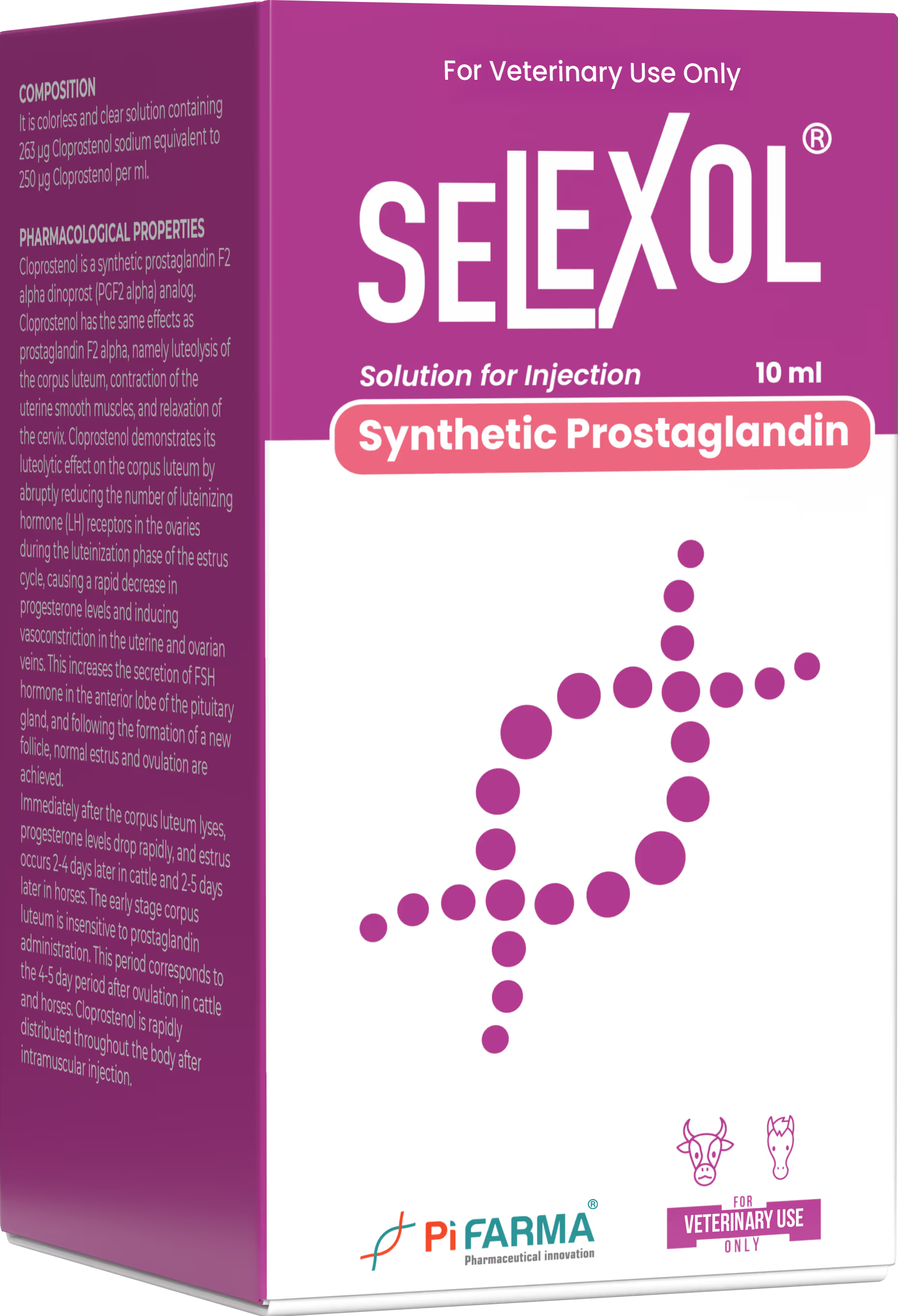
For Veterinary Use Only
For Veterinary Use Only
Solution for Injection
Synthetic Prostaglandin
COMPOSITION
It is colorless and clear solution containing 263 µg Cloprostenol sodium equivalent to 250 µg Cloprostenol per ml.
PHARMACOLOGICAL PROPERTIES
Cloprostenol is a synthetic prostaglandin F2 alpha dinoprost (PGF2 alpha) analog. Cloprostenol has the same effects as prostaglandin F2 alpha, namely luteolysis of the corpus luteum, contraction of the uterine smooth muscles, and relaxation of the cervix. Cloprostenol demonstrates its luteolytic effect on the corpus luteum by abruptly reducing the number of luteinizing hormone (LH) receptors in the ovaries during the luteinization phase of the estrus cycle, causing a rapid decrease in progesterone levels and inducing vasoconstriction in the uterine and ovarian veins. This increases the secretion of FSH hormone in the anterior lobe of the pituitary gland, and following the formation of a new follicle, normal estrus and ovulation are achieved.
Immediately after the corpus luteum lyses, progesterone levels drop rapidly, and estrus occurs 2-4 days later in cattle and 2-5 days later in horses. The early stage corpus luteum is insensitive to prostaglandin administration. This period corresponds to the 4-5 day period after ovulation in cattle and horses. Cloprostenol is rapidly distributed throughout the body after intramuscular injection. In cattle, maximum tissue levels are reached 30 minutes after administration. Cloprostenol is eliminated at approximately the same rate in urine and bile. The half-life of cloprostenol in cattle is 1.6 hours. Cloprostenol does not accumulate in mammary tissue; 0.75% of the administered dose is eliminated in milk. Due to its ability to eliminate the corpus luteum and cause a rapid decrease in progesterone levels, it is used in cattle and horses to induce and synchronize estrus.
Cloprostenol has a very short half-life in the injection site, where it reaches the highest concentrations in animals, and in the elimination sites (liver, kidney) 30 minutes after injection. The vast majority is eliminated in urine and feces, with only a very small amount excreted in milk.
AREA OF USE / INDICATIONS
Cattle;
1. In cattle with a normal cycle experiencing hidden or undetectable estrus: Cattle may be in a normal cycle but either do not show signs of estrus or show signs that are very difficult to detect. Before administering Selexol, normal cycle activity in the ovaries should be confirmed by rectal palpation of the corpus luteum. Estrus occurs 2-4 days after Selexol administration, followed by artificial insemination or natural insemination at the time of heat. If heat is not observed, another injection is given 11 days later. Insemination can be performed once between 72-84 hours or twice at 72 and 96 hours.
2. For synchronization of the estrus cycle: To facilitate controlled breeding, there are different methods for synchronizing the estrus cycle:
-A single dose of Selexol is injected into cows identified as having a corpus luteum by rectal palpation. Animals that come into estrus are inseminated or allowed to mate naturally, or artificial insemination is performed 72-96 hours after the injection.
-Selexol is injected into all desired cattle on the farm, and those that come into heat are mated. A second injection of Selexol is given 11 days later to those that do not come into heat. Animals are inseminated 2-4 days later when they come into estrus.
-All cattle on the farm are injected with Selexol twice at 11-day intervals. Mating is performed 2-4 days after the second injection when the animals come into estrus. Artificial insemination can be performed 72 and 96 hours after the second injection.
3. Routine use to improve reproductive function in the early postpartum period: A single dose or two injections of Selexol may be administered following delivery to increase uterine contractions and accelerate involution.
4. For termination of unwanted pregnancies (e.g., incorrect mating): To terminate unwanted pregnancies (abortion), it is administered to cows between the 5th and 150th days of pregnancy. With Selexol administration before the 100th day of pregnancy, abortion occurs quickly and safely within 3-5 days. When inducing abortion between the 100th and 150th days of pregnancy, the role of placental progesterone increases significantly compared to luteal progesterone, so the outcome of the application may vary. In this case, if abortion has not occurred 8 days after the application, another injection is given. Abortion should not be induced after the 150th day of pregnancy.
5. Termination of abnormal pregnancies (e.g., expulsion of a mummified fetus)
Fetal deaths can result in the fetus becoming mummified within the uterus. Selexol administration at any stage of pregnancy facilitates the expulsion of the mummified fetus from the uterus as a result of luteolysis and prevents dangers such as hydramnios and hydrallantois, which result from a pathological increase in placental fluids, by emptying the uterus.
6. Application to induce normal birth: When administered to cattle after the 270th day of pregnancy to induce normal birth, delivery occurs within 36-48 hours.
7. Application in secondary retention, pyometra, and chronic metritis: In such cases, a single injection of Selexol induces uterine contraction, facilitating expulsion of the fetus and removal of fluids from the uterus. This application supports intrauterine treatment. Elevated estrogen activates the uterine defense system.
8. Treatment of luteal cysts: Cystic ovaries may be associated with persistent luteal tissue. Selexol treatment effectively resolves this problem and allows a return to a normal cycle.
Mares
1. In cases of silent and undetectable estrus (quiet heat): Mares with a normal cycle may not show all estrus signs or other physiological changes associated with estrus (e.g., cervical edema and relaxation), making it impossible to determine the optimal breeding time. This is more common in mares that are in season but have not been bred. The application of Selexol allows the time of estrus onset to be predicted.
2. In cases of prolonged diestrus: In 20% of mares, the diestrus period is prolonged due to the presence of a persistent corpus luteum, which responds to a single injection of Selexol.
3. In cases of resorption following early fetal death: Early fetal deaths (up to the first 100 days) occur in 8-10% of mares, followed by fetal resorption and disruption of cycle activity due to persistent corpus luteum. Selexol can be used to improve these conditions.
4. In cases of pseudopregnancy: Mares with a persistent corpus luteum show signs of pregnancy, but examination reveals they are not pregnant. Selexol administration induces luteolysis and restores normal cycle activity.
5. In cases of lactation-related anestrous: Mares in lactation may not show estrus for months. Selexol administration induces a return to normal cycle activity.
6. For abortion before the 45th day of pregnancy: In mares, abortion can be induced with Selexol injections up to the 35th day of pregnancy. After the 35th day of pregnancy, endometrial capsules will form, so in this case, injections will be required for 4 consecutive days.
7. For inducing estrus at the appropriate breeding time: Selexol can be used to induce estrus in mares at the appropriate breeding time in order to make the best use of quality stallions during the breeding season.
8. For synchronization of the estrus cycle: Selexol can be used to synchronize the estrus cycle of a group of mares. Selexol is administered twice at 14-day intervals. Breeding can be performed 19-21 days after the first administration.
USAGE AND DOSAGE
Pharmacological Dose:
Cattle: 500 µg cloprostenol
Horse: 125-250 µg cloprostenol up to 400 kg, 250-500 µg cloprostenol more than 400 kg
Practical Dose:
Cattle: 2 ml is administered single or repeated intramuscular dose.
Horse: 0,5-1 ml up to 400 kg, 1-2 ml more than 400 kg. Injection site should be dry and clean.
SPECIAL CLINICAL INFORMATION AND SPECIAL WARNINGS FOR TARGET SPECIES
It should be remembered that prostaglandins are only effective in the presence of the corpus luteum. In cattle that are not sensitive to the luteolytic effect of prostaglandins, there is a 4-5 day refractory period after ovulation, meaning that if used within 5 days following ovulation, it will not be effective.
For PG to be effective in cases of pyometra developing in cows and mares, luteal tissue must be present in the ovaries.
Luteal cysts are ovarian cysts that clinically usually present with anoestrus. It is necessary to distinguish them from follicular cysts, as PG does not affect follicular cysts.
For successful cycle control and synchronization, animals must have a normal cycle. Rectal examination prior to drug administration eliminates the risk of insemination in pregnant or anestrus animals. Special attention should be paid to the nutrition and condition of treated animals.
-During the implementation of programs, sudden changes in feeding schedules, feed monitoring, or altering groups should be avoided to prevent stress-inducing factors. If artificial insemination is to be performed, ensure the quality of the semen and that the correct insemination method has been selected.
-During injection, some of the solution may be wasted or injected into fatty tissue, which may prevent the desired result from being achieved.
Use during pregnancy and lactation
Luteolysis during certain stages of pregnancy can lead to fetal loss. Therefore, it should not be used in pregnant cows and mares, except in cases of unwanted pregnancy and induced labor in the late stages of pregnancy.
ADVERSE EFFECTS
There are no known side effects at the recommended doses in cattle. In mares, heat irregularities, abdominal pain, and diarrhea may occur.
DRUG INTERACTIONS
They should not be used in combination with other medicinal products, since steroids and nonsteroidal anti-inflammatory drugs inhibit endogenous prostaglandin synthesis,.
SYMPTOMS OF OVERDOSE, PRECAUTIONS AND ANTIDOTE
In cattle, salivation and increased body temperature have been observed when 5-10 times the recommended dose is administered. In horses, when doses much higher than the recommended dose are administered, temporary and low-level sweating, increased respiration and heart rate, diarrhea, and abdominal pain have been observed. These symptoms are mild and temporary. Symptomatic treatment is administered in case of overdose.
WITHDRAWAL PERIODS
Meat: 1 day
Milk: “0” (zero) day.
CONTRAINDICATIONS
It is not administered intravenously. It should not be used in the following cases:
It should not be used in mares with acute or subacute gastrointestinal disorders, in mares with acute or subacute respiratory diseases (this is an important criterion, as prostaglandin injection in some animal species can result in acute respiratory problems), or in cases where cervical dilation has not occurred, as uterine rupture may lead to death.
GENERAL WARNINGS
Consult your veterinary surgeon before using and in case an unexpected effect is observed. Keep out of reach of children.
PRECAUTIONS TO BE TAKEN BY THE ADMINISTRATOR AND WARNINGS FOR VETERINARY SURGEON
Prostaglandin can be absorbed through the skin, so women of childbearing age, pregnant women, and asthmatics should be particularly careful when using this product. If accidentally spilled on the skin, it should be washed off immediately with soap and water.
F2 alpha-type prostaglandins can cause bronchospasm in humans. In case of breathing difficulties resulting from accidental inhalation or injection, bronchodilators such as isoprenaline or salbutamol should be administered quickly by inhalation.
STORAGE CONDITIONS AND SHELF LIFE
It should be stored in dry and cool place at 4°C-25°C, protect from light. Shelf life is 2 years.
DISPOSAL AFTER USE AND WARNINGS FOR NON-TARGET SPECIES
Any used veterinary medicinal product or its residual material should be disposed of in accordance with local regulations.
COMMERCIAL PRESENTATION FORM
10 ml colorless glass flacons with box.
PLACE AND CONDITIONS OF SALE
It is sold in pharmacies, veterinary clinics, polyclinics, and animal hospitals with a prescription from a veterinarian. (VSP)
APPROVAL DATE OF LEAFLET: 20.10.2025
MARKETING AUTHORIZATION DATE AND NO: 27.02 2012- 025/0050
MARKETING AUTHORIZATION HOLDER
Pİ FARMA İLAÇ SAN. VE TİC. A.Ş.
Malıköy Başkent OSB Mah. 26. Cad. No:34/A Sincan/Ankara-Türkiye
MANUFACTURER COMPANY
FDN İLAÇ SAN. VE TİC. LTD. ŞTİ.
Büyükkayacık OSB Mah. İnsu Sokak No:3 Selçuklu/Konya-Türkiye
Made in Turkiye